Last Updated on 05/08/2026
Introduction: Understanding the Reality of Modafinil Overdose
I’ve encountered numerous cases where patients both prescribed users and those obtaining medication through alternative channels, have presented with symptoms of stimulant toxicity. While modafinil enjoys a reputation for safety that surpasses traditional psychostimulants, the clinical reality is that overdose can and does occur, with consequences ranging from uncomfortable to life-threatening.
Modafinil (Provigil) belongs to the eugeroic class of wakefulness-promoting agents. It’s FDA-approved for narcolepsy, obstructive sleep apnea, and shift work sleep disorder. In recent years, its use has expanded dramatically through off-label prescribing for conditions like ADHD, depression and cognitive enhancement in healthy individuals. This expanded use, combined with online availability, has increased the incidence of both intentional and accidental overdoses.
Clinical Pharmacology and Toxicokinetics
Understanding Modafinil’s Mechanism in Therapeutic Context
To comprehend the effects of overdose, we must first understand how modafinil operates at therapeutic doses:
Dopaminergic Modulation: Modafinil inhibits the dopamine transporter (DAT), increasing extracellular dopamine concentrations in the striatum and nucleus accumbens. This enhances motivation, attention, and executive function the basis for its cognitive-enhancing effects.
Noradrenergic Activation: The medication increases norepinephrine release in the hypothalamus and prefrontal cortex, promoting vigilance and arousal.
Histaminergic Stimulation: Modafinil activates histaminergic neurons in the tuberomammillary nucleus, contributing to sustained wakefulness.
Orexin System Enhancement: It may stimulate orexin-producing neurons, stabilizing arousal states.
At therapeutic doses (100-200 mg daily), these effects produce what I describe to my patients as “clean wakefulness”, alertness without the jitteriness or euphoria associated with amphetamines.
Toxicokinetics: What Happens at Supra-Therapeutic Doses
When doses exceed 400-600 mg daily or when single doses surpass 200 mg, the pharmacological effects become amplified and dysregulated:
| Toxicokinetic Parameter | Therapeutic Range | Toxic Range |
|---|---|---|
| Peak Plasma Concentration | 2-3 mcg/mL | 5-10+ mcg/mL |
| Half-Life | 12-15 hours | 15-20 hours (due to saturable metabolism) |
| Time to Peak Effect | 2-3 hours | 3-5 hours (delayed due to slowed absorption) |
| Protein Binding | 60% | 60% (saturable; free fraction increases at high doses) |
Metabolic Saturation: At toxic doses, modafinil’s primary metabolic pathway (CYP3A4-mediated oxidation) becomes saturated, leading to a non-linear increase in plasma concentrations. This means that doubling the dose doesn’t simply double the effect, it can produce a disproportionate rise in circulating drug levels.
Active Metabolites: Modafinil’s major metabolite, modafinil acid, is pharmacologically inactive at therapeutic concentrations. However, at overdose levels, this metabolite can accumulate and potentially contribute to toxicity through unknown mechanisms.
Clinical Presentations Across the Toxicity Spectrum
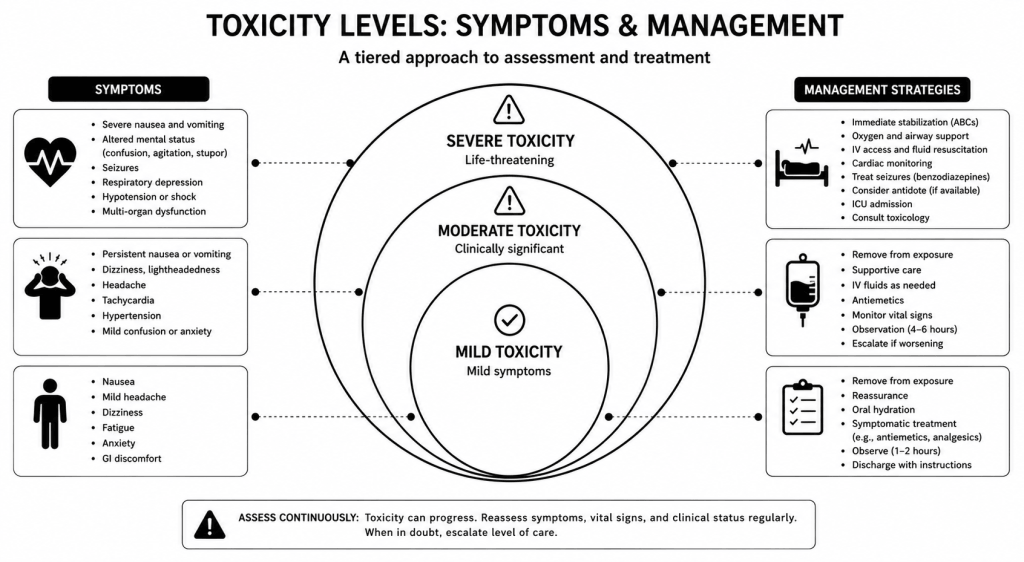
Mild Toxicity: 400-800 mg Single Dose
In my clinical experience, patients presenting after ingesting 2-4 times the standard dose typically exhibit symptoms that, while uncomfortable, are rarely life-threatening:
| System | Symptoms | Onset | Duration |
|---|---|---|---|
| Neurological | Headache, mild agitation, insomnia, restlessness | 2-4 hours | 12-24 hours |
| Cardiovascular | Tachycardia (100-120 bpm), mild hypertension (BP 140-160/90-100) | 3-6 hours | 12-18 hours |
| Gastrointestinal | Nausea, reduced appetite, dry mouth | 2-4 hours | 8-12 hours |
| Psychological | Anxiety, irritability, difficulty focusing | 2-6 hours | Variable |
Clinical Pearl: Patients in this range rarely require more than supportive care. I typically recommend hydration, a calm environment, and avoidance of caffeine or other stimulants that could exacerbate symptoms.
Moderate Toxicity: 800-2000 mg Single Dose
This range represents the majority of intentional overdoses I’ve encountered. Patients exhibit more pronounced symptoms that may require medical evaluation:
| System | Symptoms | Clinical Significance |
|---|---|---|
| Neurological | Severe insomnia (unable to sleep for 24-36 hours), tremors, dizziness, confusion, hallucinations (visual or auditory) | Risk of psychosis; potential for self-harm during hallucinations |
| Cardiovascular | Tachycardia (120-150 bpm), palpitations, significant hypertension (BP 160-180/100-110), ECG changes (prolonged QTc) | Risk of arrhythmias; monitoring recommended |
| Gastrointestinal | Severe nausea, vomiting, diarrhea, abdominal pain | Risk of dehydration; electrolyte imbalances |
| Psychological | Paranoid ideation, panic attacks, aggressive behavior, suicidal ideation | Immediate psychiatric evaluation required |
| Autonomic | Hyperthermia (38.5-39.5°C), diaphoresis, flushing | Can lead to dehydration and electrolyte disturbances |
Case Study from Literature: The 2013 case report involving a 38-year-old male who ingested 2,000 mg (10x standard dose) is illustrative. He presented with agitation, severe insomnia, resting tachycardia of 130 bpm, and blood pressure of 165/105 mmHg. With IV hydration, benzodiazepines for agitation, and close monitoring, he recovered fully within 48 hours. This case demonstrates both the potential severity of overdose and the generally favorable outcome with appropriate supportive care.
Severe Toxicity: >2000 mg Single Dose
While rare, high-dose ingestions (>2,000 mg or >10x standard dose) represent true medical emergencies:
| System | Symptoms | Emergency Interventions |
|---|---|---|
| Neurological | Seizures (generalized tonic-clonic), status epilepticus, severe confusion, delirium, coma | Benzodiazepines, anticonvulsants, airway management |
| Cardiovascular | Significant tachycardia (>150 bpm), severe hypertension (BP >180/120), arrhythmias (atrial fibrillation, SVT), myocardial ischemia | ECG monitoring, antihypertensives, antiarrhythmics |
| Psychiatric | Acute psychosis with hallucinations, mania, severe aggression | Antipsychotics (haloperidol, olanzapine); psychiatric admission |
| Metabolic | Metabolic acidosis, rhabdomyolysis, hyperthermia (>39.5°C) | IV fluids, electrolyte replacement, cooling measures |
| Gastrointestinal | Severe vomiting, aspiration risk | Nasogastric suction, antiemetics |
Clinical Pearl: The absence of a specific antidote for modafinil toxicity makes supportive care paramount. The primary goals are stabilizing vital signs, managing symptoms and preventing complications while the drug is metabolized and eliminated.
Emergency Management Protocol
Initial Assessment and Triage
Based on my emergency department experience, the following approach is recommended for suspected modafinil overdose:
Immediate Actions (0-15 minutes):
- Airway, Breathing, Circulation: Assess ABCs. Establish IV access. Administer oxygen if SpO2 < 95%.
- Rapid History: Determine time of ingestion, dose (if known), co-ingestants, and patient’s baseline health status.
- Vital Signs: Monitor blood pressure, heart rate, respiratory rate, temperature, and oxygen saturation continuously.
- Pulse Oximetry and ECG: Obtain baseline ECG to assess for QTc prolongation or arrhythmias.
- Laboratory Studies: Complete blood count, comprehensive metabolic panel, creatine kinase, troponin (if chest pain or ECG changes), urine drug screen.
- Activated Charcoal: Consider within 1-2 hours of ingestion if no contraindications (decreased consciousness, risk of aspiration). Dose: 1g/kg (up to 50g) in adults.
Specific Symptom Management
Agitation and Psychosis:
- Benzodiazepines are first-line: Diazepam 5-10 mg IV or Lorazepam 2-4 mg IV
- If uncontrolled, consider antipsychotics: Haloperidol 5-10 mg IM or Olanzapine 5-10 mg IM
- Avoid physical restraints without pharmacologic sedation
Seizures:
- Benzodiazepines: Lorazepam 2-4 mg IV or Diazepam 5-10 mg IV
- If seizure persists, administer fosphenytoin 15-20 mg PE/kg IV
- Consider propofol infusion for refractory status epilepticus
Hypertension:
- Mild elevation: Usually resolves spontaneously with sedation
- Significant hypertension (SBP >180 mmHg): Labetalol 10-20 mg IV, or nicardipine infusion
- Avoid beta-blockers in isolation if cocaine co-ingestion is possible
Tachycardia:
- Typically responds to sedation
- If persistent and symptomatic: Consider beta-blockers (metoprolol 5-10 mg IV)
Hyperthermia:
- External cooling: Ice packs, cooling blankets
- IV fluids (normal saline) for hydration and evaporative cooling
- If severe (>39.5°C) and unresponsive: Consider dantrolene
Enhanced Elimination
Unlike some toxins, modafinil does not benefit significantly from enhanced elimination techniques:
| Technique | Efficacy | Clinical Decision |
|---|---|---|
| Hemodialysis | Limited (large volume of distribution, high protein binding) | Not recommended as first-line treatment |
| Hemoperfusion | Limited data | Not routinely recommended |
| Multiple-Dose Activated Charcoal | May reduce absorption, but no evidence of enhanced elimination | Consider if polydrug ingestion |
| Urinary Alkalization | No effect on modafinil excretion | Not recommended |
| Forced Diuresis | Not effective | Contraindicated due to fluid overload risk |
Monitoring Parameters
Admission Criteria (Admit to Medical Ward or ICU):
- Moderate-severe symptoms (hallucinations, seizures, significant hypertension/tachycardia)
- Co-ingestion of other substances
- Underlying cardiovascular disease
- Age >65 years
- Suicidal intent (psychiatric consult required)
Monitoring Frequency:
| Parameter | Frequency |
|---|---|
| Vital Signs | Every 15-30 minutes initially, then hourly as stable |
| ECG | Every 4-6 hours (or prn) |
| Laboratory Studies | Every 4-8 hours (or prn) |
| Mental Status | Every 1-2 hours (Glasgow Coma Scale) |
Risk Factors and Vulnerable Populations
Identifying High-Risk Patients
Through my clinical practice, I’ve identified several groups at increased risk for modafinil overdose:
Intentional Overdose Risk Factors:
- History of depression, anxiety, or bipolar disorder
- Prior suicide attempts or self-harm
- Substance use disorders
- Chronic pain or other chronic health conditions
- Occupational or academic stress
Accidental Overdose Risk Factors:
- Visual impairment (confusing tablets)
- Cognitive impairment (dementia, delirium)
- Language barriers affecting medication understanding
- Polypharmacy (especially with other CNS-active drugs)
- Compulsive redosing due to tolerance
Special Populations Requiring Heightened Vigilance
| Population | Specific Considerations | Recommended Actions |
|---|---|---|
| Elderly Patients | Reduced hepatic function; increased sensitivity to CNS effects; higher risk of falls and cognitive impairment | Start at 50-100 mg; monitor closely; avoid if history of dementia |
| Patients with Hepatic Impairment | Delayed clearance; accumulation at lower doses | Consider 50% dose reduction; avoid if Child-Pugh Class C |
| Pregnant Women | Limited safety data; potential fetal harm; high protein binding limits placental transfer but not complete | Generally avoid; use only if benefit clearly outweighs risk |
| Adolescents | Higher risk of misuse; developing brains more susceptible to neuropsychiatric effects | Strictly monitor; prescribe only after specialist consult |
| Patients on Hormonal Contraceptives | CYP3A4 induction reduces contraceptive efficacy | Mandatory backup contraception; one month continued after stopping |
Prevention Strategies for Healthcare Providers
Prescribing Considerations
As a clinical pharmacist, I emphasize these principles when reviewing modafinil prescriptions:
- Start Low, Go Slow: Initiate at 100 mg daily, especially in elderly or sensitive patients. Titrate based on response and tolerability.
- Document Rationale: Clearly document the indication, baseline symptom assessment, and monitoring plan.
- Screen for Contraindications: Uncontrolled hypertension, cardiac arrhythmias, psychosis history, and known hypersensitivity are absolute or relative contraindications.
- Check for Interactions: Review for medications affecting CYP3A4 (azole antifungals, certain SSRIs, anticonvulsants).
- Patient Education: Provide clear written instructions on dose, timing, and side effects. Discuss the contraceptive interaction thoroughly.
Patient Education Points
Based on my clinical conversations, here’s what I ensure every patient understands:
Critical Safety Messages:
- “Never exceed your prescribed dose, even if you feel it’s not working. Taking more than 200 mg can make you sick without improving alertness.”
- “If you accidentally take a double dose or think you’ve taken too much, contact your pharmacist or doctor immediately. DO NOT wait to see how you feel.”
- “Modafinil is not a substitute for sleep. Using it to stay awake for extended periods increases your overdose risk.”
- “Keep this medication in a secure place, out of reach of children and visitors. A single high dose could be harmful.”
- “If you’re pregnant or planning pregnancy, discuss this with your doctor before continuing modafinil.”
- “If you’re on birth control pills, you must use backup contraception throughout treatment and for at least one month after stopping.”
Signs Requiring Immediate Medical Attention:
- Chest pain or palpitations
- Severe headache or blurred vision
- Hallucinations or confusion
- Difficulty breathing
- Seizures (any type)
Long-Term Consequences of Modafinil Overdose
Potential Sequelae from Severe Overdose
Based on case reports and my clinical observations, severe modafinil overdose can lead to:
| Complication | Mechanism | Treatment |
|---|---|---|
| QT Prolongation | Effects on cardiac ion channels | ECG monitoring; avoid QT-prolonging drugs; treat arrhythmias if they occur |
| Rhabdomyolysis | Prolonged agitation, seizures, hyperthermia | IV fluids; monitor creatine kinase; renal function; manage metabolic acidosis |
| Acute Kidney Injury | Myoglobinuria from rhabdomyolysis | Hydration; ensure adequate urine output; renal replacement therapy if needed |
| Cognitive Changes | Post-hypoxic insult from seizures; PTSD from the event | Neuropsychiatric evaluation; cognitive rehabilitation; psychological support |
| Psychiatric Sequelae | New-onset or exacerbation of psychosis, depression, or PTSD | Immediate psychiatric consultation; long-term follow-up |
Recovery Timeline
| Timeframe | Expected Recovery Milestones |
|---|---|
| 24-48 hours | Acute symptoms resolve; vital signs stabilize; mental status improves |
| 3-7 days | Return to baseline cognitive function; resolution of insomnia; appetite returns |
| 1-4 weeks | Complete metabolic clearance; normalization of laboratory values |
| Variable | Psychiatric recovery may be longer; long-term monitoring for cognitive sequelae |
Conclusion: Balancing Therapeutic Benefit with Safety
Modafinil represents a significant advancement in the pharmacologic management of excessive daytime sleepiness. Its unique eugeroic profile provides alertness without the abuse potential and cardiovascular risks of traditional stimulants. However, like all pharmacologically active agents, it carries real risks that require respectful clinical attention.
Key Takeaway Messages:
- Respect the Dosing Window: 200 mg daily is the recommended maximum. Exceeding this dose does not proportionately enhance benefit but significantly increases toxicity risk.
- Know Your Patient: Screen for contraindications, check for interactions, and provide comprehensive education on safety and signs of toxicity.
- Act Promptly: If overdose is suspected, seek medical evaluation. Supportive care is effective, but timing matters.
- Prevention is Primary: Proper prescribing, patient education, and storage prevent the vast majority of overdoses.
- Integrate Treatment: Modafinil is one tool in a comprehensive approach to sleep disorders. Medication alone is insufficient; lifestyle modifications are essential.
FAQ
Can modafinil overdose be fatal?
Based on available literature and my clinical experience, death from modafinil alone is extremely rare. The LD50 (lethal dose for 50% of subjects) in animal models is approximately 1000 mg/kg, suggesting a wide margin of safety. However, death can occur secondary to complications (seizures, hyperthermia, cardiac arrhythmias) or in polydrug overdoses. Every overdose should be treated as a potential emergency.
How quickly do overdose symptoms appear?
Symptoms typically begin within 2-6 hours of ingestion, corresponding to peak plasma concentrations. Insomnia and agitation may appear earlier, while hallucinations and severe symptoms may emerge as concentrations peak.
What’s the role of activated charcoal in modafinil overdose?
Activated charcoal can reduce absorption if administered within 1-2 hours of ingestion. However, given modafinil’s rapid absorption, its utility diminishes over time. It’s particularly valuable in patients who present early, especially with polydrug ingestions. Never administer if the patient has decreased consciousness or risk of aspiration.
What’s the maximum safe dose for a single day?
For FDA-approved indications, the maximum recommended dose is 200 mg daily. Some off-label studies use up to 400 mg daily, but this requires careful medical supervision and monitoring. Any dose above 400 mg should be considered potentially toxic.
What about armodafinil?
Armodafinil (Nuvigil) is the R-enantiomer of modafinil with a slightly longer half-life. Overdose management principles are similar, though armodafinil may have longer duration of toxicity due to its extended half-life.
‼️ Disclaimer: The information provided in this article about modafinil is intended for informational purposes only and is not a substitute for professional medical consultation or recommendations. The author of the article are not responsible for any errors, omissions, or actions based on the information provided.
References:
- Modafinil misuse and overdose. Reactions Weekly. 2022
- Alacam H. Modafinil dependence: A case with attention-deficit/hyperactivity disorder.
https://www.ncbi.nlm.nih.gov/pmc/articles/PMC5912487/. 2018 - Arnold VK. A 9-week, randomized, double-blind, placebo-controlled, parallel-group, dose-finding study to evaluate the efficacy and safety of modafinil as treatment for adults with ADHD. 2012
- Clinical guideline for the evaluation, management and long-term care of obstructive sleep apnea in adults. (2009)
- Cortese S. Comparative efficacy and tolerability of medications for attention-deficit hyperactivity disorder in children, adolescents, and adults. 2018
- Goss AJ. Modafinil augmentation therapy in unipolar and bipolar depression: Aa systematic review and meta-analysis of randomized controlled trials. 2013
- Krishnan R. A rare case of modafinil dependence. 2015
- Practice parameters for the treatment of narcolepsy and other hypersomnias of central origin. 2007
- Shangyan H. Meta-analysis of the efficacy of modafinil versus placebo in the treatment of multiple sclerosis fatigue. 2018
- Stuhec M. Efficacy, acceptability, and tolerability of lisdexamfetamine, mix amphetamine salts, methylphenidate, and modafinil in the treatment of attention-deficit hyperactivity disorder in adults. 2018
- Swapnajeet S. Modafinil dependence and hypersexuality: a case report and review of the evidence. 2016
- Modafinil toxicity. https://www.researchgate.net/profile/Henry-Spiller-2/publication/278292953_Retrospective_review_of_modafinil_toxicity/links/59397b0aa6fdcc58ae86943a/Retrospective-review-of-modafinil-toxicity.pdf. 2009
- Gal Neuman, Naim Shehadeh, Giora Pillar. Unsuccessful Suicide Attempt of a 15 Year Old Adolescent with Ingestion of 5000 mg Modafinil. https://pmc.ncbi.nlm.nih.gov/articles/PMC2725258/. 2009