Introduction to Breathing Exercises and Concentration
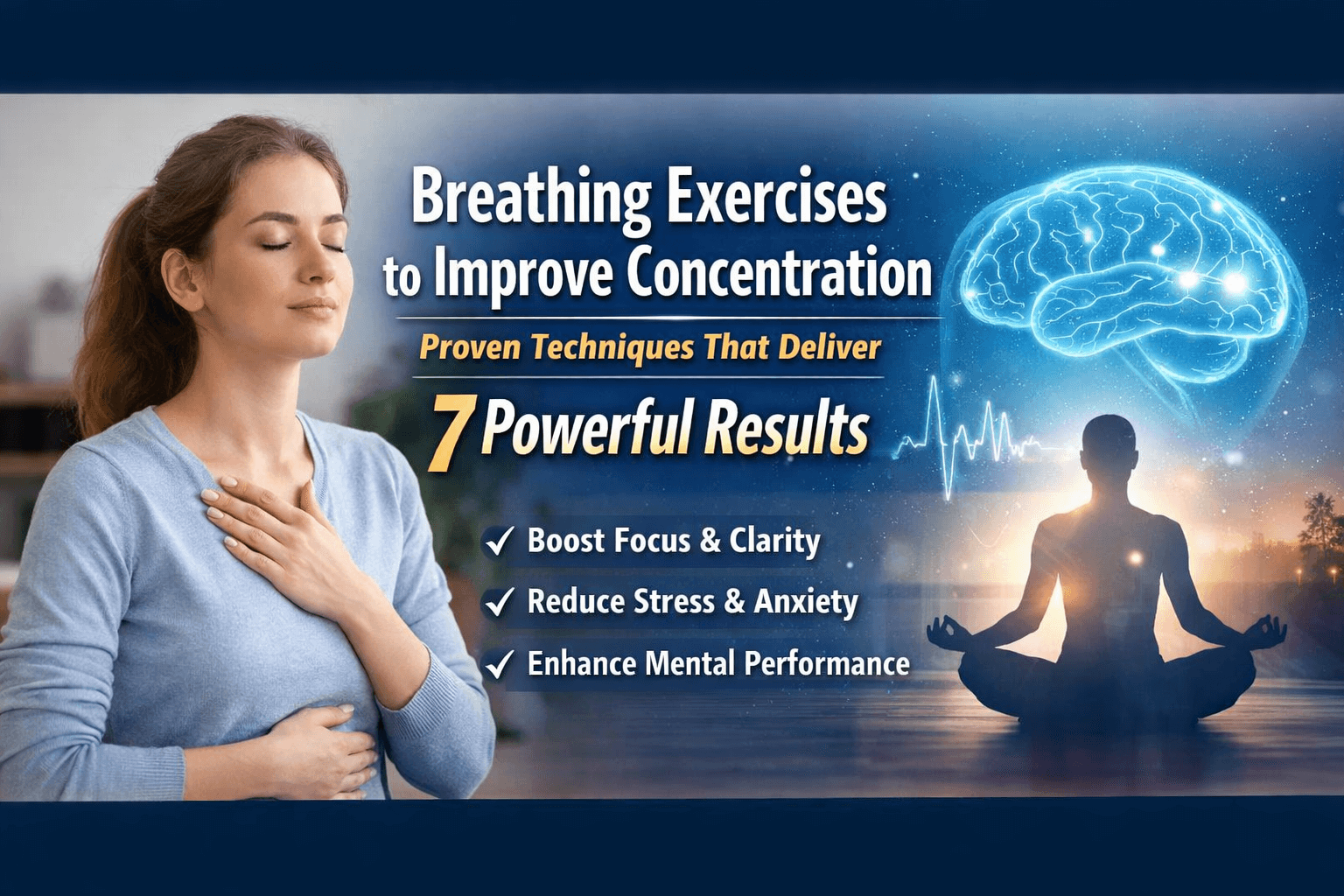
Breathing exercises to improve concentration are no longer viewed as fringe wellness practices. Instead, they’re increasingly recognized as practical, evidence-based tools for enhancing cognitive performance in everyday life. In a world filled with constant notifications, tight deadlines, and mental overload, maintaining sustained attention has become a real challenge.
Fortunately, controlled breathing offers a simple, accessible solution. By intentionally adjusting how you breathe, you can influence brain chemistry, nervous system balance, and attention control. What’s more, these techniques require no equipment, no special setting, and very little time.
This article provides a comprehensive, structured exploration of breathing exercises to improve concentration. It integrates scientific understanding, practical techniques, and real-world applications to help readers achieve measurable improvements in focus, productivity, and mental stamina.
The Science Behind Breathing and Focus
How Oxygen Affects Brain Performance
The brain consumes roughly 20% of the body’s oxygen, despite accounting for only about 2% of body weight. When breathing is shallow or erratic, oxygen delivery becomes inefficient. As a result, cognitive functions such as attention, working memory, and decision-making can decline.
Breathing exercises to improve concentration emphasize slow, deep inhalations that optimize oxygen exchange in the lungs. This improved oxygenation supports neural efficiency, which in turn enhances mental clarity and sustained focus.
Nervous System Regulation Explained
Breathing patterns directly influence the autonomic nervous system. Rapid, shallow breathing activates the sympathetic “fight-or-flight” response. In contrast, slow and controlled breathing stimulates the parasympathetic “rest-and-digest” system.
By activating the parasympathetic response, breathing exercises to improve concentration reduce physiological stress markers such as elevated heart rate and cortisol levels. This creates an internal environment conducive to calm attention and cognitive control.
Why Breathing Exercises Improve Concentration
Stress Reduction and Cognitive Load
Stress is one of the most significant barriers to concentration. When stress levels rise, the brain prioritizes threat detection over higher-order thinking. Breathing exercises interrupt this cycle by signaling safety to the nervous system.
As stress decreases, cognitive load is reduced. This allows more mental resources to be allocated to tasks that require focus, reasoning, and creativity.
Attention Span and Mental Clarity
Regular practice of breathing exercises to improve concentration trains the brain to sustain attention for longer periods. Over time, practitioners often report reduced mind-wandering, faster task initiation, and improved clarity during complex tasks.
These benefits are particularly valuable in environments that demand prolonged mental effort, such as academic study, professional work, and strategic planning.
Types of Breathing Exercises to Improve Concentration
Diaphragmatic Breathing
Diaphragmatic breathing, also known as belly breathing, is foundational. It encourages full lung expansion and efficient oxygen exchange.
Step-by-Step Technique
- Sit upright with feet flat on the floor
- Place one hand on your chest, the other on your abdomen
- Inhale slowly through the nose for four seconds
- Feel the abdomen expand while the chest remains still
- Exhale gently through the mouth for six seconds
Practiced for five minutes, this technique can noticeably enhance concentration and reduce mental tension.
Box Breathing
Box breathing follows a structured rhythm that promotes mental stability and control.
When to Use Box Breathing
This method is particularly effective before high-stakes activities such as presentations, exams, or negotiations.
Technique:
- Inhale for four seconds
- Hold for four seconds
- Exhale for four seconds
- Hold for four seconds
Repeat for four to six cycles. Many professionals, including military and medical personnel, rely on this approach to maintain focus under pressure.
Alternate Nostril Breathing
Originating from yogic traditions, alternate nostril breathing balances hemispheric brain activity.
Traditional Roots and Modern Use
Modern studies suggest this technique may enhance executive function and attentional control. It’s often used as a preparatory exercise before deep work sessions.
Breathing Exercises for Work and Study
Quick Desk-Based Techniques
Breathing exercises to improve concentration don’t require leaving your desk. Short, two-minute breathing resets can prevent mental fatigue and sustain productivity throughout the day.
Examples include slow-count breathing and extended exhalation techniques, both of which calm the nervous system quickly.
Pre-Meeting Focus Routines
A brief breathing routine before meetings can sharpen listening skills and decision-making capacity. This practice also reduces reactive behavior, supporting more thoughtful communication.
Breathing Exercises for Students
Exam Preparation Strategies
Students often experience heightened anxiety before exams. Breathing exercises to improve concentration help regulate this anxiety, enabling better recall and problem-solving.
A five-minute breathing session before studying can also enhance information encoding and retention.
Improving Memory Retention
Controlled breathing has been linked to improved hippocampal function, which plays a key role in memory. When combined with effective study techniques, breathing exercises amplify learning outcomes.
Breathing Exercises for Digital Fatigue
Managing Screen-Induced Brain Fog
Extended screen time often leads to shallow breathing and cognitive exhaustion. Regular breathing breaks counteract these effects by restoring oxygen balance and reducing visual strain-related stress.
The result is improved alertness and reduced mental fog, even during long digital work sessions.
Common Mistakes to Avoid
- Over-breathing, which can cause dizziness
- Inconsistent practice
- Poor posture during exercises
- Expecting immediate, dramatic results
Consistency and proper technique are critical for long-term benefits.
Evidence-Based Benefits of Breathing Exercises
Research published by institutions such as Harvard Medical School confirms that structured breathing practices can improve attention, emotional regulation, and executive function.
External reference: https://www.health.harvard.edu/mind-and-mood/relaxation-techniques-breath-control-helps-quell-errant-stress-response
FAQ
1. How long do breathing exercises take to improve concentration?
Most people notice benefits within one to two weeks of daily practice.
2. Can breathing exercises replace caffeine?
They don’t replace caffeine entirely but can significantly reduce reliance on stimulants.
3. Are breathing exercises safe for everyone?
Generally yes, although individuals with respiratory conditions should consult a professional.
4. How often should I practice?
Two to three short sessions daily are sufficient for measurable improvements.
5. Do breathing exercises work for ADHD?
Many individuals report improved focus, though results vary and should complement professional care.
6. Can I practice breathing exercises while walking?
Yes, as long as breathing remains slow and controlled.
Conclusion
Breathing exercises to improve concentration represent a low-cost, high-impact strategy for enhancing mental performance. By integrating these techniques into daily routines, individuals can achieve greater focus, emotional balance, and cognitive resilience.
When practiced consistently and correctly, controlled breathing becomes more than a relaxation tool it becomes a competitive advantage in an increasingly demanding cognitive landscape.
‼️ Disclaimer: The information provided in this article about modafinil is intended for informational purposes only and is not a substitute for professional medical consultation or recommendations. The author of the article are not responsible for any errors, omissions, or actions based on the information provided.