Introduction to the Nootropics Economy
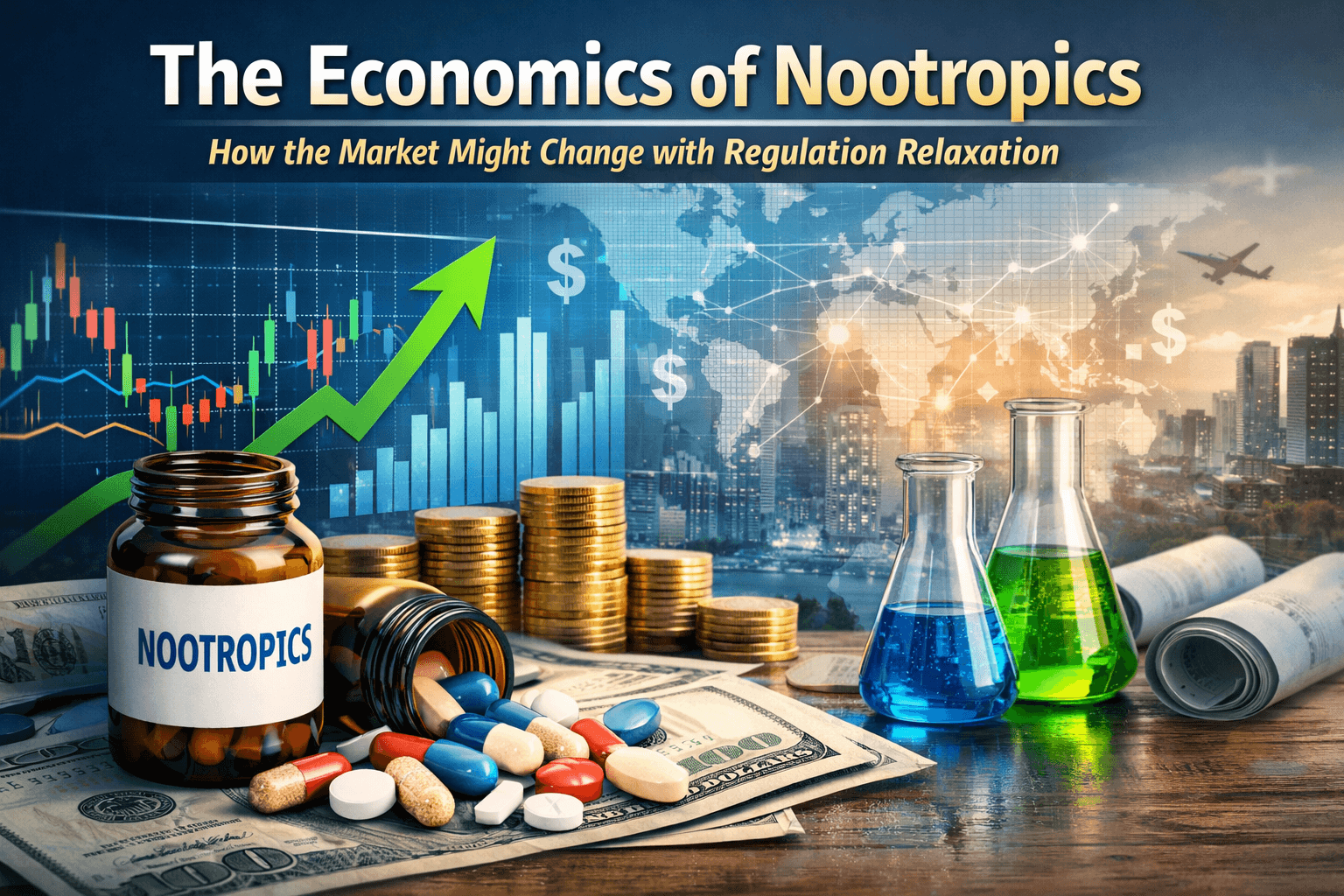
The nootropics industry sits at a fascinating crossroads of neuroscience, wellness, and economics. Once a niche corner of biohacking forums, cognitive enhancers have steadily marched into mainstream conversation. But here’s the big question investors, consumers, and regulators keep circling: what happens if regulations loosen?
This isn’t just about smarter pills. It’s about supply chains, pricing power, brand wars, and a rapidly evolving global market that could look very different in just a few years.
What Are Nootropics?
Nootropics are substances designed to enhance cognitive performance think memory, focus, creativity, or mental stamina. They range from natural compounds like L-theanine and bacopa monnieri to synthetic molecules originally developed for medical use.
In economic terms, nootropics are a hybrid product. They sit somewhere between pharmaceuticals and dietary supplements, which is exactly why regulation plays such a pivotal role in shaping the market.
Why the Nootropics Market Is Exploding
Why now? Simple. Knowledge work dominates modern economies. When your brain is your primary tool, optimizing it feels less like a luxury and more like maintenance. Add remote work, competitive job markets, and a culture obsessed with self-optimization, and demand almost writes itself.
Current State of the Global Nootropics Market
The global nootropics market is valued in the billions and growing at a strong compound annual growth rate. North America currently leads, but Asia-Pacific is closing the gap fast.
What’s driving this growth isn’t just curiosity it’s repeat usage. Once consumers experience perceived cognitive benefits, many turn nootropics into a daily habit, which creates predictable revenue streams.
Key Consumer Demographics
The audience is broader than most people assume.
Students, Professionals, and Biohackers
Students chase exam performance. Professionals want focus without burnout. Biohackers? They’re the early adopters, often willing to experiment and spend more. Together, these groups form a diversified demand base that stabilizes the market even during economic downturns.
Understanding Regulation in the Nootropics Industry
Regulation is the invisible hand steering this entire industry.
Current Regulatory Frameworks
Most nootropics are regulated as dietary supplements, not drugs. That means less rigorous approval processes, but also tighter restrictions on claims.
FDA, EMA, and Global Differences
The FDA in the United States, the EMA in Europe, and regulators in Asia all approach nootropics differently. This fragmentation increases compliance costs and limits global scalability for brands.
Barriers Created by Strict Regulations
Strict rules don’t just protect consumers; they also act as economic moats. High compliance costs discourage startups, reduce competition, and keep prices elevated.
What Regulation Relaxation Could Look Like
Relaxation doesn’t mean chaos. More likely, it means clearer pathways.
Possible Scenarios of Deregulation
Governments could expand approved ingredient lists, simplify clinical requirements, or standardize international frameworks. Any of these moves would immediately lower costs.
Lessons from CBD and Supplement Markets
Look at CBD. Once regulations eased, prices dropped, brands exploded, and innovation surged. The nootropics market could follow a similar trajectory.
Price Forecast: How Relaxed Regulations May Affect Costs
Here’s where economics really kick in.
Manufacturing Costs and Economies of Scale
Relaxed rules would allow manufacturers to scale production, negotiate better raw material contracts, and automate processes. That’s classic cost reduction economics.
Retail Pricing and Consumer Accessibility
Lower costs usually translate to lower prices, but not overnight. In the short term, brands may protect margins. Over time, competition forces prices down.
Short-Term vs Long-Term Price Trends
Short-term: modest price drops.
Long-term: significant affordability gains and wider adoption.
Emergence of New Brands and Market Entrants
When barriers fall, entrepreneurs rush in.
Lower Barriers to Entry
Simplified compliance means startups can launch faster and cheaper. Expect a surge of niche brands targeting specific cognitive needs.
Rise of Private Labels and Direct-to-Consumer Brands
E-commerce thrives in low-regulation environments. Direct-to-consumer models cut out intermediaries, reshaping pricing and customer relationships.
Branding as a Competitive Weapon
When products become similar, branding becomes everything. Trust, transparency, and storytelling will separate winners from losers.
Innovation and Product Diversification
More freedom fuels creativity.
Stack Customization and Personalized Nootropics
Instead of one-size-fits-all pills, expect personalized stacks based on genetics, lifestyle, or cognitive goals.
AI-Driven Cognitive Supplements
AI could analyze user data and recommend real-time adjustments. That’s not science fiction it’s already emerging.
Financial and Market Analysis
Money follows momentum.
Investment Trends and Venture Capital Interest
VCs love scalable wellness markets. Relaxed regulation reduces risk, making nootropics far more attractive to institutional capital.
Mergers, Acquisitions, and Consolidation
As the market matures, expect big players to acquire smaller innovators.
Public vs Private Market Opportunities
Private startups may dominate early innovation, while public companies focus on scale and global reach.
Impact on Consumers
Consumers stand to gain the most.
Increased Trust and Transparency
Clearer rules can actually increase trust. Standardized labeling and testing benefit everyone.
Accessibility and Global Reach
Lower prices and easier distribution mean nootropics won’t remain a luxury product.
Risks and Challenges of Regulation Relaxation
No upside comes without downside.
Quality Control and Safety Concerns
Too much freedom could invite low-quality products. Effective enforcement will still matter.
Market Saturation Risks
An overcrowded market can confuse consumers and squeeze margins.
Regional Market Outlook
North America
Likely to remain the innovation hub, especially if regulations soften.
Europe
More cautious but stable, with strong consumer protection norms.
Asia-Pacific
Fastest growth potential due to population size and tech adoption.
Long-Term Market Outlook
Sustainability of Growth
As cognitive health becomes mainstream, demand should remain resilient.
Will Nootropics Go Mainstream?
All signs point to yes. Regulation relaxation could be the final push.
Conclusion
The economics of nootropics are tightly bound to regulation. Relax those constraints, and the market transforms lower prices, more innovation, new brands, and broader access. But balance will be key. Smart regulation, not absence of it, may unlock the industry’s full potential and turn cognitive enhancement into a normalized part of everyday life.
FAQ
1. Are nootropics a good long-term investment?
Yes, especially if regulation becomes clearer and more favorable.
2. Will relaxed regulations make nootropics cheaper?
Over time, increased competition and scale should lower prices.
3. Is the nootropics market risky?
Like any emerging market, it carries risk, but also high upside.
4. How might regulation affect innovation?
Balanced regulation tends to accelerate innovation rather than stifle it.
5. What should consumers watch out for?
Quality, transparency, and evidence-based formulations matter more than hype.
‼️ Disclaimer: The information provided in this article about modafinil is intended for informational purposes only and is not a substitute for professional medical consultation or recommendations. The author of the article are not responsible for any errors, omissions, or actions based on the information provided.