Introduction to FLModafinil
What Is FLModafinil?
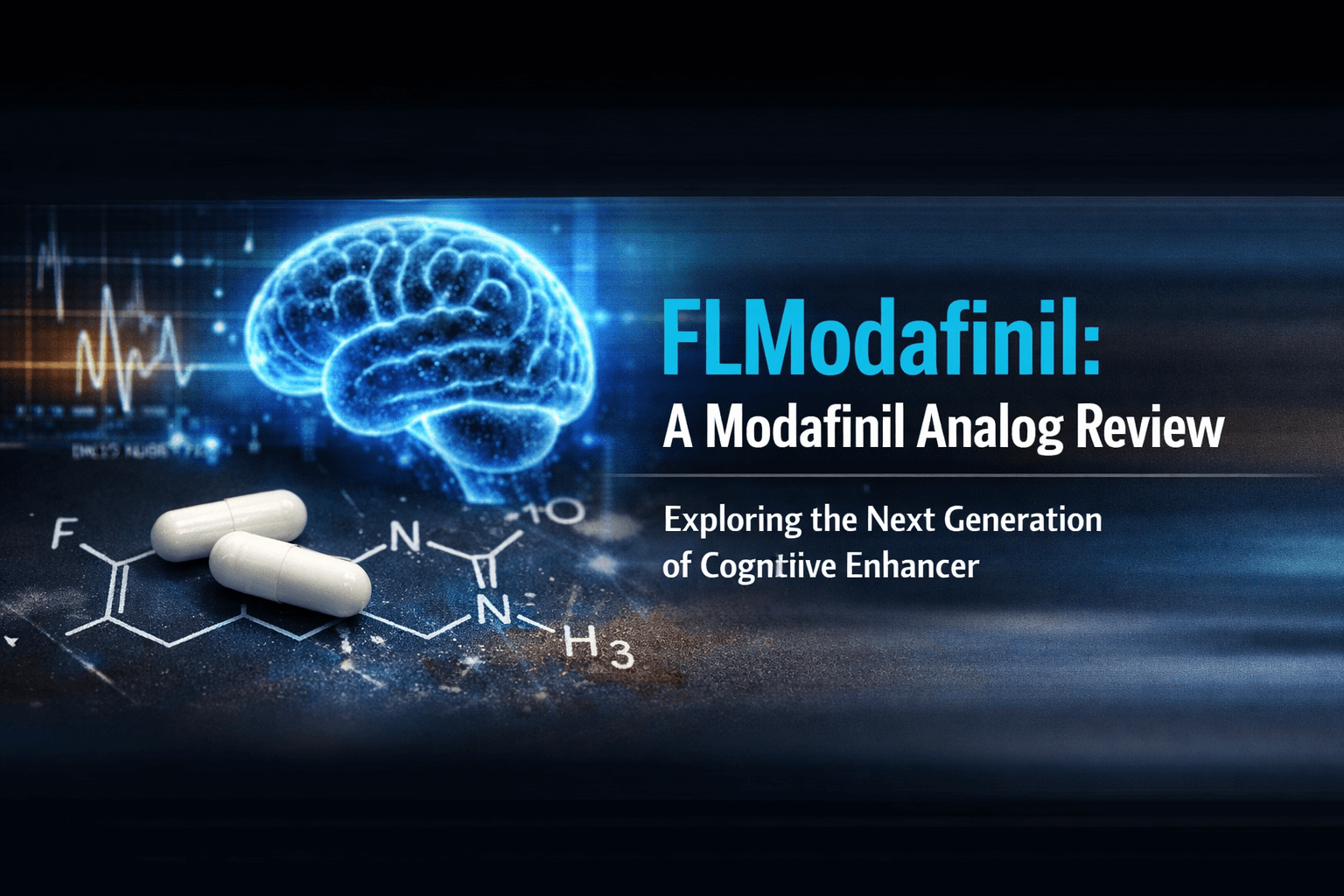
FLModafinil is a synthetic compound often described as a modafinil analog, meaning it is chemically related to modafinil but modified at a structural level. The defining feature is the addition of a fluorine atom, a small change that can have surprisingly meaningful effects. Think of it like tuning an engine with a slightly different fuel mixture the core design stays the same, but performance characteristics may shift.
Why FLModafinil Is Gaining Attention
Interest in FLModafinil has grown within nootropic and research communities due to anecdotal reports suggesting enhanced potency and a smoother cognitive profile. As productivity culture accelerates and cognitive performance becomes a competitive advantage, compounds like FLModafinil naturally draw curiosity.
Understanding Modafinil and Its Analogs
Brief Overview of Modafinil
Modafinil is widely known as a wakefulness-promoting agent originally developed for sleep disorders. Over time, it became popular off-label for its perceived cognitive-enhancing effects, especially in areas like focus, alertness, and mental stamina.
What Makes an Analog Different?
Chemical Structure Variations
An analog shares a core chemical scaffold with its parent compound but includes specific modifications. In FLModafinil, fluorination alters how the molecule interacts at the biochemical level.
Functional Differences
Even small chemical changes can affect absorption, duration, potency, and subjective feel. This is why analogs are not simply “stronger versions,” but distinct compounds with their own profiles.
Chemical Profile of FLModafinil
Structural Comparison With Modafinil
FLModafinil retains the diphenylmethyl-sulfinyl structure characteristic of modafinil. The addition of a fluorine atom increases molecular stability and may influence binding affinity in the brain.
Fluorination and Its Impact
Fluorine is often used in pharmaceutical chemistry to enhance bioavailability and metabolic resistance. In simple terms, it can help a compound last longer and act more efficiently.
Mechanism of Action
How FLModafinil Works in the Brain
While direct research is limited, FLModafinil is believed to act similarly to modafinil by influencing dopamine transporters. Instead of flooding the brain with neurotransmitters, it subtly adjusts how they are recycled.
Neurotransmitters Involved
Dopamine plays a central role, but downstream effects may involve norepinephrine, histamine, and orexin systems. This multi-pathway influence helps explain the “clean energy” many users describe.
Cognitive and Functional Effects
Focus and Concentration
Users often report heightened ability to stay locked onto tasks without mental drift. It feels less like forced stimulation and more like removing mental friction.
Wakefulness and Alertness
FLModafinil is primarily associated with sustained wakefulness. Instead of sharp peaks, the effect is often described as a long, steady plateau.
Motivation and Productivity
Motivation may increase indirectly. Tasks feel less overwhelming, making it easier to initiate and complete work.
FLModafinil vs Modafinil
Potency Comparison
Anecdotal evidence suggests FLModafinil may be active at lower doses. This does not automatically mean “better,” but it does indicate higher potency.
Duration of Effects
FLModafinil is frequently described as longer-lasting, which can be a double-edged sword depending on timing and sensitivity.
Subjective Experience Differences
Some users describe FLModafinil as smoother and less jittery, while others note a more pronounced cognitive edge.
FLModafinil vs Other Modafinil Analogs
FLModafinil vs Armodafinil
Armodafinil is the R-enantiomer of modafinil and is more researched. FLModafinil, by contrast, is less studied but potentially more potent.
FLModafinil vs Adrafinil
Adrafinil is a prodrug that converts into modafinil in the liver. FLModafinil skips this step, which may reduce metabolic strain.
Dosage Considerations
Commonly Reported Dosage Ranges
Reported dosages are generally lower than modafinil, often in the 10-50 mg range. Precision matters here.
Factors Influencing Dosage
Body weight, tolerance, and prior experience with stimulants all play a role.
Side Effects and Tolerability
Commonly Reported Side Effects
Headache, reduced appetite, and mild insomnia are commonly mentioned. Hydration and timing appear important.
Rare or Less Common Reactions
Anxiety or irritability may occur, especially at higher doses.
Safety Profile and Research Status
Available Research and Limitations
FLModafinil lacks extensive human studies. Most information comes from chemical analysis and user reports.
Long-Term Safety Unknowns
Long-term effects remain unclear, underscoring the importance of caution.
Legal and Regulatory Status
Research Chemical Classification
FLModafinil is typically sold as a research chemical, not as a medication.
International Legal Variability
Legality varies by country, and users are responsible for understanding local regulations.
Who Is Interested in FLModafinil?
Students and Knowledge Workers
People in cognitively demanding roles often explore compounds like FLModafinil.
Biohackers and Nootropic Enthusiasts
Those interested in optimizing mental performance see FLModafinil as an experimental tool.
Practical Considerations
Stacking With Other Nootropics
Some combine FLModafinil with supplements like L-theanine to smooth the experience.
Timing and Use Patterns
Morning use is most common due to long-lasting effects.
Ethical and Responsible Use
Cognitive Enhancement Debate
Is enhancement fair? The debate continues, especially in academic and professional settings.
Importance of Informed Decision-Making
Understanding risks and limitations is essential before experimentation.
Future Outlook for FLModafinil
Research Trends
Interest in fluorinated analogs is growing in pharmaceutical research.
Potential Therapeutic Interest
If studied further, FLModafinil could attract clinical attention.
Conclusion
FLModafinil stands as an intriguing modafinil analog with distinct characteristics. While anecdotal reports suggest enhanced potency and duration, the lack of robust research means it should be approached carefully. For those interested in cognitive performance, FLModafinil represents possibility, but also responsibility.
FAQ
Is FLModafinil stronger than modafinil?
Many users report higher potency, but this is anecdotal and not clinically confirmed.
How long do FLModafinil effects last?
Effects are often described as long-lasting, sometimes exceeding modafinil’s duration.
Is FLModafinil legal?
Its legal status varies by country and is often classified as a research chemical.
Does FLModafinil cause dependence?
There is no clear evidence, but long-term data is lacking.
Is FLModafinil suitable for beginners?
Due to limited research, caution is advised, especially for those new to nootropics.
‼️ Disclaimer: The information provided in this article about modafinil is intended for informational purposes only and is not a substitute for professional medical consultation or recommendations. The author of the article are not responsible for any errors, omissions, or actions based on the information provided.
References:
- U.S. Food and Drug Administration. PROVIGIL. U.S. Department of Health and Human Services. https://www.accessdata.fda.gov/drugsatfda_docs/label/2015/020717s037s038lbl.pdf . 2015
- Ballon JS, Feifel D. A systematic review of modafinil: potential clinical uses and mechanisms of action. J Clin Psychiatry. 2006
- Willavize, S. A., Nichols, A. I., & Lee, J. Population pharmacokinetic modeling of armodafinil and its major metabolites. https://doi.org/10.1002/jcph.800 . 2016
- Fuxe K, et al. Modafinil enhances the increase of extracellular serotonin levels induced by the antidepressant drugs fluoxetine and imipramine: a dual probe microdialysis study in awake rat. Synapse. 2005
- Mechanisms of modafinil: A review of current research. nih.gov. 2007
- PROVIGIL (modafinil) Tablets. FDA.GOV. 2010
- Oliva Ramirez A, Keenan A, Kalau O, Worthington E, Cohen L, Singh S. Prevalence and burden of multiple sclerosis-related fatigue: a systematic literature review. 2021.
- Ciancio A, Moretti MC, Natale A, Rodolico A, Signorelli MS, Petralia A. Personality Traits and Fatigue in Multiple Sclerosis: A Narrative Review. Journal of Clinical Medicine. 2023
- Mereu, M., Bonci, A., Newman, A. H., & Tanda, G. The neurobiology of modafinil as an enhancer of cognitive performance and a potential treatment for substance use disorders. https://doi.org/10.1007/s00213-013-3232-4 . 2013
- Woo, J., & Verduzco-Gutierrez, M. Traumatic brain injury: An overview of epidemiology, pathophysiology, and medical management. Medical Clinics of North America. https://doi.org/10.1016/j.mcna.2019.11.001 . 2020
- Oliva Ramirez A, Keenan A, Kalau O, Worthington E, Cohen L, Singh S. Prevalence and burden of multiple sclerosis-related fatigue: a systematic literature review. https://doi.org/10.1186/s12883-021-02396-1 . 2021