
Last Updated on 12/08/2026
Introduction: A Troubling Trend in Cognitive Enhancement
A worrying trend has emerged recently. Many people (especially young professionals and students) have become captivated by so-called “productivity stacks,” and one of the most popular combinations is modafinil paired with nicotine. On forums and social media, this mix is touted as a miracle solution for achieving peak focus and high productivity. In reality, however, people are simply combining two potent substances. One is a prescription drug with a long list of potential side effects that should not be taken without medical supervision. The other is a well-known stimulant that is highly addictive and places significant strain on the cardiovascular system.
One particular case stands out in my memory. A 28-year-old software developer proudly described his daily “productivity ritual” to me: he would take modafinil, purchased without a prescription and keep a nicotine vape in his hand almost constantly throughout the day. While he certainly felt incredibly focused during work hours, he also admitted to suffering from severe anxiety, terrible sleep and a growing nicotine dependency, one he needed simply to make it through the day. This story clearly illustrates why this issue warrants close attention.
There are no clinical studies confirming the safety or efficacy of combining modafinil and nicotine. All talk of supposed benefits is based entirely on subjective experiences, anecdotal accounts from random people online. Yet, beneath these perceived advantages lie very real problems: cardiovascular issues, a rapid path to addiction, and serious risks to mental health, including anxiety and mood swings. The reality is far less appealing than it might seem at first glance.
Understanding the Individual Substances
Modafinil: Pharmacology and Clinical Use
Modafinil, marketed as Provigil, is a wakefulness-promoting agent approved by the FDA for three specific conditions: narcolepsy, obstructive sleep apnea (as an adjunct to CPAP therapy) and shift work sleep disorder. Its mechanism involves inhibition of the dopamine transporter, leading to increased dopamine availability in the brain’s reward and cognitive centers. Additionally, modafinil affects norepinephrine, histamine, orexin and glutamate systems, creating what many patients describe as “clean” wakefulness—alertness without the jitteriness associated with traditional stimulants.
Key Clinical Characteristics:
- Half-Life: 12-15 hours, allowing once-daily dosing
- Onset of Action: 60-90 minutes after oral administration
- Standard Dose: 200 mg daily for FDA-approved indications
- DEA Schedule: IV, indicating low abuse potential
- Common Side Effects: Headache, insomnia, nausea, anxiety
- Serious Risks: Stevens-Johnson syndrome (rare), psychiatric effects, cardiovascular effects
Nicotine: The Addiction Epidemic
Nicotine, a natural alkaloid found in tobacco, acts on nicotinic acetylcholine receptors throughout the nervous system. Its effects are mediated through the release of multiple neurotransmitters, with dopamine playing a central role in its reinforcing and addictive properties. This is why nicotine is among the most addictive substances known—the National Institute on Drug Abuse reports that while 70% of smokers want to quit, only 7% succeed without assistance.
Delivery Methods and Health Risks:
Smoking provides the fastest onset (7-10 seconds) but carries the highest risks, including lung cancer, COPD, and cardiovascular disease. Vaping offers similarly rapid absorption but introduces risks of lung injury and cardiovascular effects. Chewing tobacco has a slower onset but is associated with oral cancers and gum disease. Nicotine gum and lozenges have minimal cancer risk but still cause cardiovascular effects. Transdermal patches provide the slowest absorption with the lowest acute risks but still affect heart rate and blood pressure.
The Pharmacological Interaction
Theoretical Mechanisms and Shared Pathways
Despite the absence of formal clinical trials on this combination, we can understand potential interactions through individual pharmacology. Both modafinil and nicotine affect the dopaminergic and noradrenergic systems, creating a theoretical risk of additive effects.
Shared Neurotransmitter Effects:
Modafinil’s primary action is dopamine transporter inhibition, leading to increased dopamine availability. It also enhances norepinephrine release. Nicotine activates acetylcholine receptors, which in turn trigger dopamine and norepinephrine release. This shared influence on dopamine and norepinephrine pathways is the foundation of the theoretical synergy some users report, but it’s also the basis for significant safety concerns.
Cardiovascular Impact:
The additive cardiovascular effects are the most significant safety concern. Modafinil typically increases heart rate by 2-4 beats per minute and blood pressure by 3-5 mmHg. Nicotine’s effects are more substantial, often increasing heart rate by 10-20 beats per minute and blood pressure by 5-10 mmHg. The combined effect could potentially lead to dangerous tachycardia or hypertension, especially in individuals with underlying cardiovascular risk factors.
Dopamine Synergy and Addiction Risk:
Both substances increase dopamine in the brain’s reward pathways. This creates a theoretical risk of enhanced reinforcing effects, making the combination more rewarding than either substance alone and potentially increasing addiction risk. Additionally, excessive dopamine activity can lead to overstimulation, anxiety or even psychosis in vulnerable individuals.
What Remains Unknown
The research gap is substantial. Clinical trials evaluating the safety or efficacy of combined modafinil and nicotine use simply do not exist. Dosing guidelines remain entirely absent, and long-term safety data have never been collected. Any purported benefits rest solely on anecdotal reports, which carry no scientific weight. This profound lack of evidence should serve as a powerful deterrent against combining these substances.
Reported Effects and User Motivations
Why People Combine These Substances
Based on my clinical experience and review of patient reports, individuals cite several reasons for combining modafinil and nicotine. Some describe seeking “enhanced focus” or “superior productivity,” believing that modafinil provides sustained wakefulness while nicotine delivers sharp, immediate bursts of attention. Others report using the combination to compensate for perceived tolerance to either substance or to manage withdrawal symptoms.
A characteristic scenario involves a professional working long hours, perhaps in technology or finance, who obtains modafinil without prescription and uses nicotine via vaping. They describe intense focus during work sessions but also report anxiety, sleep disruption and escalating nicotine use. This pattern is concerning for several reasons:
- Unsupervised Use: Neither substance is prescribed or monitored by a healthcare provider.
- Dose Escalation: Tolerance to nicotine develops rapidly, leading to increased use.
- Psychological Dependence: The perception of benefit may reinforce continued use.
- Masked Side Effects: Anxiety and sleep disruption may be ignored in pursuit of productivity.
Anecdotal Reports versus Clinical Evidence
Online forums contain numerous reports of enhanced focus and productivity from this combination. Users describe “sharp focus like never before,” “faster processing speed” and “better motivation and mood.” However, these accounts are unverified, uncontrolled, and subject to placebo effects and selection bias. Users who have negative experiences are less likely to post, and many reports originate from individuals with financial interests in promoting particular products or lifestyles.
In contrast, clinical evidence is completely absent. These reports are not a reliable source of medical information and should not guide clinical decision-making.
Medical Risks and Safety Concerns
Cardiovascular Risks
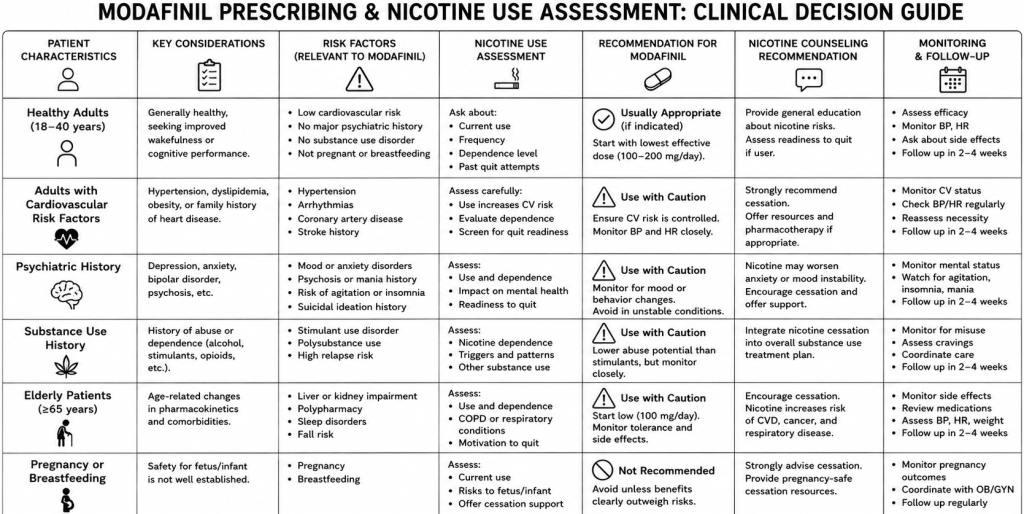
The most significant safety concern with combining modafinil and nicotine is cardiovascular. The combined effects on heart rate and blood pressure could potentially lead to dangerous tachycardia, hypertension or arrhythmias, particularly in individuals with underlying cardiovascular disease.
Patient Populations at Highest Risk:
- Individuals with pre-existing hypertension
- Those with coronary artery disease
- Patients with arrhythmias
- Older adults
- Individuals with diabetes (increased cardiovascular risk)
Clinical Implications:
- Myocardial Ischemia: Increased heart rate and blood pressure increase myocardial oxygen demand, potentially precipitating angina or heart attack.
- Arrhythmias: Tachycardia and stimulant effects may trigger arrhythmias.
- Vasoconstriction: Nicotine causes vasoconstriction, worsening hypertension.
- Stroke Risk: Uncontrolled hypertension is a major risk factor for stroke.
Addiction and Dependence
Nicotine is highly addictive and the combination with modafinil may enhance its reinforcing effects through shared dopaminergic pathways. This could increase the difficulty of discontinuing nicotine and potentially intensify cravings. The perception of cognitive enhancement may reinforce continued use, making cessation even more challenging.
Signs of Nicotine Dependence:
- Strong cravings or urges to use
- Difficulty controlling use
- Continued use despite negative consequences
- Tolerance (needing more to achieve the same effect)
- Withdrawal symptoms when not using
- Significant time spent obtaining, using or recovering from the substance
Psychiatric and Cognitive Risks
The combination may also affect psychiatric and cognitive function. Excessive dopaminergic and noradrenergic activity can lead to anxiety, jitteriness and panic attacks. Prolonged alertness from modafinil combined with nicotine’s stimulant effects can disrupt sleep architecture, leading to insomnia and sleep deprivation. In vulnerable individuals, excessive dopamine activity may precipitate psychosis, paranoia, or hallucinations.
Individuals with pre-existing anxiety disorders, bipolar disorder, schizophrenia or substance use disorders are at highest risk for these complications.
Clinical Recommendations and Safety Guidelines
For Healthcare Providers
When patients inquire about combining modafinil and nicotine, I recommend a clear, evidence-based response. Emphasize that there is no clinical evidence supporting the safety or efficacy of this combination. Nicotine is highly addictive with significant cardiovascular risks. Modafinil should only be used for FDA-approved indications under medical supervision. Combining CNS stimulants increases the risk of adverse effects.
Screening and Monitoring:
- Blood pressure and heart rate should be assessed at each visit
- Cardiovascular history should be reviewed baseline and annually
- Psychiatric history should be obtained baseline and as needed
- Substance use screening should be performed baseline and annually
- Nicotine dependence assessment should be conducted if using nicotine
If a patient is using nicotine, discuss evidence-based cessation strategies. Consider referral to smoking cessation programs, cardiology or psychiatry as appropriate.
For Patients Considering This Combination
I strongly advise against combining modafinil and nicotine. This combination has no proven safety or efficacy and exposes you to significant cardiovascular and addiction risks. If you are currently using this combination, please consult your healthcare provider immediately.
If You Continue to Use Nicotine:
- Switch to the safest delivery method: gum, lozenges, or patches rather than smoking or vaping
- Monitor your cardiovascular status regularly and seek medical evaluation if symptoms occur
- Avoid daily use to prevent tolerance and dependence
- Consider alternative cognitive strategies: optimize sleep, regular exercise, mindfulness practices
Evidence-Based Alternatives
For Cognitive Enhancement
Sleep, exercise and nutrition form the foundation of cognitive health. No medication or supplement can replace these fundamental factors. Regular sleep, moderate exercise and proper nutrition are the most effective, safest strategies for cognitive enhancement.
Additional Safe Options:
- Caffeine with L-theanine has moderate evidence and is generally safe when monitored
- Omega-3 fatty acids support brain health with minimal risk
- Mindfulness meditation enhances focus and reduces stress
- B-vitamins (B6, B9, B12) support neurological function
- Magnesium has potential benefits for sleep and relaxation
For ADHD Treatment
If you require pharmacologic treatment for ADHD, discuss evidence-based options with your healthcare provider. Methylphenidate, amphetamines, atomoxetine and modafinil (off-label) are options with varying evidence and safety profiles. These medications should only be used under medical supervision for diagnosed conditions.
For Smoking Cessation
If you are using nicotine, evidence-based cessation strategies include nicotine replacement therapy (patches, gum, lozenges), bupropion (Zyban), varenicline (Chantix), and behavioral therapy. These treatments have success rates of 15-40% at 12 months, significantly improving your chances of quitting.
Special Populations
Several groups are particularly vulnerable to the risks of combining modafinil and nicotine.
Pregnant or Breastfeeding Women: Should absolutely avoid both substances. Nicotine poses major risks to fetal development, and modafinil’s safety in pregnancy is uncertain.
Adolescents and Young Adults: At increased risk for addiction and adverse effects on developing brains. Modafinil is not approved for use under age 18.
Individuals with Cardiovascular Disease: Face absolute contraindications to combination use. Both substances increase cardiovascular risk.
Individuals with Psychiatric Disorders: Risk exacerbating their conditions. Need close psychiatric supervision.
Older Adults: Increased sensitivity to cardiovascular and cognitive effects. Higher risk of adverse outcomes.
Conclusion
The combination of modafinil and nicotine lacks clinical evidence for safety or efficacy, yet carries significant cardiovascular, addictive and psychiatric risks. Nicotine’s high addiction potential and cardiovascular effects are compounded when combined with modafinil, while any perceived cognitive benefits are anecdotal and unsubstantiated. Safe, evidence-based alternatives (including proper sleep, exercise, nutrition and mindfulness) are more effective for cognitive enhancement. Healthcare providers should counsel patients against this combination and offer smoking cessation support when needed.
FAQ
Is it safe to combine modafinil and nicotine?
No. There is no clinical evidence supporting the safety of this combination. The potential cardiovascular, addiction and psychiatric risks are significant and well-established.
Does nicotine enhance the effects of modafinil?
There is no clinical evidence to support this claim. While some users report subjective enhancement, these reports are anecdotal and unreliable. The combination may actually increase side effects without providing meaningful cognitive benefit.
Which nicotine delivery method is safest?
For nicotine replacement, gum, lozenges and patches are significantly safer than smoking or vaping. However, they still carry cardiovascular risks and addiction potential. The safest option is not using nicotine at all.
Will I become addicted to nicotine if I use it occasionally?
Nicotine is highly addictive, and even occasional use can lead to dependence. Tolerance develops rapidly and many individuals find themselves using more than intended.
‼️ Disclaimer: The information provided in this article about modafinil is intended for informational purposes only and is not a substitute for professional medical consultation or recommendations. The author of the article are not responsible for any errors, omissions, or actions based on the information provided.
References:
- U.S. Food and Drug Administration. PROVIGIL. U.S. Department of Health and Human Services. https://www.accessdata.fda.gov/drugsatfda_docs/label/2015/020717s037s038lbl.pdf . 2015
- Ballon JS, Feifel D. A systematic review of modafinil: potential clinical uses and mechanisms of action. J Clin Psychiatry. 2006
- Willavize, S. A., Nichols, A. I., & Lee, J. Population pharmacokinetic modeling of armodafinil and its major metabolites. https://doi.org/10.1002/jcph.800 . 2016
- Becker, P. M., Schwartz, J. R., Feldman, N. T., & Hughes, R. J. Effect of modafinil on fatigue, mood, and health-related quality of life in patients with narcolepsy. https://doi.org/10.1007/s00213-003-1508-9 . 2004
- Wirz, S., Nadstawek, J., Kühn, K. U., Vater, S., Junker, U., & Wartenberg, H. C. Modafinil zur Behandlung der Tumorfatigue: Eine Interventionsstudie [Modafinil for the treatment of cancer-related fatigue: An intervention study]. https://doi.org/10.1007/s00482-010-0987-y . 2010
- Woo, J., & Verduzco-Gutierrez, M. Traumatic brain injury: An overview of epidemiology, pathophysiology, and medical management. Medical Clinics of North America. https://doi.org/10.1016/j.mcna.2019.11.001 . 2020
- Oliva Ramirez A, Keenan A, Kalau O, Worthington E, Cohen L, Singh S. Prevalence and burden of multiple sclerosis-related fatigue: a systematic literature review. https://doi.org/10.1186/s12883-021-02396-1 . 2021.
- Ciancio A, Moretti MC, Natale A, Rodolico A, Signorelli MS, Petralia A. Personality Traits and Fatigue in Multiple Sclerosis: A Narrative Review. Journal of Clinical Medicine. https://doi.org/10.3390/jcm12134518 . 2023
- Mereu, M., Bonci, A., Newman, A. H., & Tanda, G. The neurobiology of modafinil as an enhancer of cognitive performance and a potential treatment for substance use disorders. https://doi.org/10.1007/s00213-013-3232-4 . 2013
- Greenblatt, K., & Adams, N. Modafinil. StatPearls Publishing. https://www.ncbi.nlm.nih.gov/books/NBK531476/ . 2023
- Catherine Anne Martin, Joshua Lile, Greg Guenthner, Joye C Anestis, Seth R Batten, Thomas H Kelly. Behavioral Effects of Modafinil and Nicotine, Alone and in Combination, in Tobacco-Deprived Young Adult Smokers. J Clin Psychopharmacol. https://pmc.ncbi.nlm.nih.gov/articles/PMC4120247/ . 2014