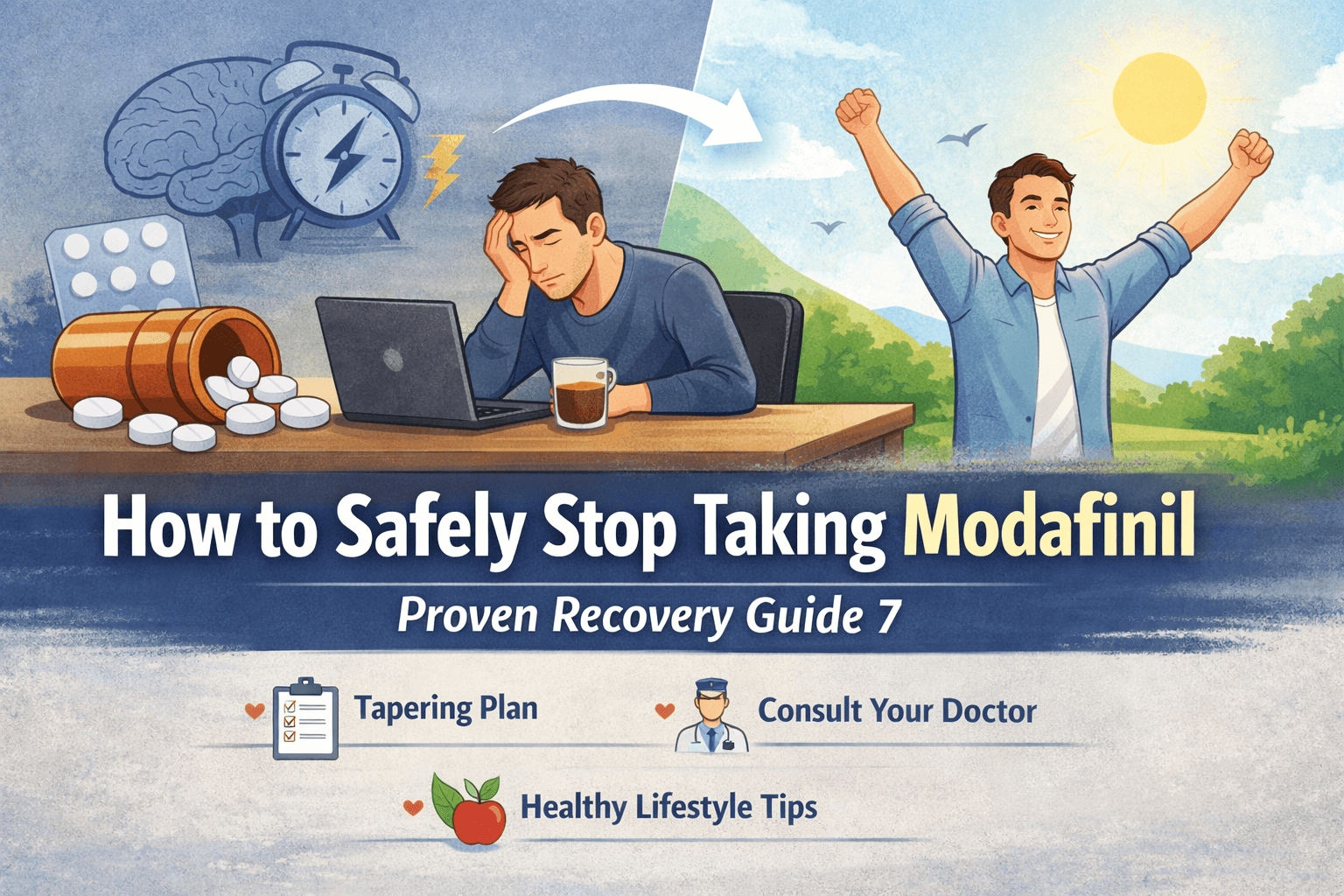
Stopping a prescription stimulant can feel daunting. If you are wondering how to safely stop taking modafinil, you are not alone. Many people reach a point where continuing modafinil no longer aligns with their health goals, work demands, or personal preferences. The good news is that, with the right approach, discontinuation can be safe, structured, and manageable.
How to safely stop taking modafinil using evidence-based principles, medical best practices, and practical lifestyle strategies. It is written in clear, accessible language and focuses on safety, confidence, and long-term well-being.
Understanding Modafinil and Why People Stop Using It
What Modafinil Is and How It Works
Modafinil is a wakefulness-promoting medication commonly prescribed for narcolepsy, shift work sleep disorder, and obstructive sleep apnea related fatigue. It works by influencing neurotransmitters such as dopamine, norepinephrine, and histamine, helping users stay alert and focused.
Although modafinil is often described as having a lower abuse potential than traditional stimulants, it still alters brain chemistry. Over time, the body can adapt, which is why stopping modafinil requires planning rather than guesswork.
Common Reasons for Discontinuation
People decide to stop taking modafinil for many reasons, including:
- Resolution of the original sleep disorder
- Side effects such as anxiety, headaches, or insomnia
- Concerns about long-term use
- Desire to restore natural sleep-wake cycles
- Lifestyle or career changes
Regardless of the reason, understanding how to safely stop taking modafinil reduces unnecessary discomfort and health risks.
Is It Safe to Stop Taking Modafinil Suddenly?
Cold Turkey vs Gradual Reduction
Stopping modafinil “cold turkey” is not usually recommended unless advised by a healthcare professional. While modafinil does not cause classic drug dependence, abrupt cessation can lead to rebound fatigue, mood changes, and cognitive slowing.
A gradual taper allows your nervous system to recalibrate. This approach is widely regarded as the safest method when learning how to safely stop taking modafinil.
Potential Risks of Abrupt Cessation
Sudden discontinuation may result in:
- Extreme tiredness or hypersomnia
- Brain fog and poor concentration
- Irritability or low mood
- Reduced motivation
These symptoms are not typically dangerous, but they can disrupt daily functioning and increase the risk of relapse.
How to Safely Stop Taking Modafinil Step by Step
Medical Consultation and Planning
Before making changes, consult the prescribing physician. This step is essential for anyone serious about learning how to safely stop taking modafinil. A clinician can assess dosage, duration of use, and underlying health conditions.
Important discussion points include:
- Current daily dose
- Length of modafinil use
- Sleep quality and work schedule
- Mental health history
Creating a Tapering Schedule
Tapering means slowly reducing the dose over time. There is no universal schedule, but gradual reduction is the cornerstone of safe discontinuation.
Sample Tapering Timeline
| Week | Daily Dose Example |
|---|---|
| 1 | Reduce by 25% |
| 2 | Reduce by 50% |
| 3 | Reduce by 75% |
| 4 | Discontinue |
This is a general illustration only. Individual plans should always be customized.
Withdrawal Symptoms You May Experience
Physical Symptoms
Physical effects during modafinil withdrawal are usually mild but noticeable. They may include:
- Persistent fatigue
- Headaches
- Increased appetite
- Sleep disturbances
These symptoms reflect the body’s adjustment to lower stimulation.
Psychological and Cognitive Effects
Some individuals report:
- Low motivation
- Mild depressive feelings
- Reduced focus
- Slower reaction times
Understanding these effects in advance helps normalize the experience and reinforces commitment to safely stopping modafinil.
Managing Withdrawal Safely and Effectively
Sleep Hygiene and Recovery
Quality sleep is critical when discontinuing modafinil. Focus on:
- Consistent bedtimes
- Limiting screen exposure before sleep
- Avoiding caffeine late in the day
These practices support natural circadian rhythm recovery.
Nutrition, Hydration, and Supplements
A balanced diet supports brain recovery. Emphasize:
- Complex carbohydrates
- Lean protein
- Omega-3 fatty acids
Hydration is equally important. Some individuals also discuss supplements such as magnesium or B-complex vitamins with their healthcare provider.
For additional evidence-based sleep guidance, refer to external resources such as the Sleep Foundation.
Lifestyle Adjustments During Modafinil Discontinuation
Work, Productivity, and Expectations
Productivity may temporarily decline. Planning lighter workloads during tapering is a practical step in how to safely stop taking modafinil.
Helpful strategies include:
- Breaking tasks into smaller steps
- Using natural light exposure
- Scheduling demanding tasks earlier in the day
Exercise and Stress Reduction
Moderate exercise supports dopamine regulation and mood. Walking, stretching, or light resistance training can improve energy without overstimulation.
Stress-reduction techniques such as breathing exercises or mindfulness also ease the transition.
When to Seek Medical Help
Seek professional help if you experience:
- Severe depression
- Persistent inability to function
- Worsening sleep disorders
- New or unusual symptoms
These situations are uncommon but should never be ignored.
Long-Term Recovery After Stopping Modafinil
Most people fully stabilize within several weeks. Energy levels, focus, and motivation typically return to baseline or improve as natural sleep patterns normalize.
Successfully learning how to safely stop taking modafinil often leads to better sleep awareness, healthier routines, and renewed confidence in managing alertness naturally.
FAQ
1. How long does modafinil withdrawal last?
Symptoms usually last from a few days to two weeks, depending on dose and duration of use.
2. Can I stop modafinil without tapering?
Some people can, but tapering is generally safer and more comfortable.
3. Is modafinil addictive?
Modafinil has a lower addiction risk than traditional stimulants, but the body can still adapt to it.
4. Will my energy return after stopping?
Yes. Most individuals regain natural energy levels over time.
5. Can lifestyle changes replace modafinil?
In many cases, improved sleep, nutrition, and stress management significantly reduce the need for stimulants.
6. Should I replace modafinil with another stimulant?
This should only be done under medical supervision.
Conclusion
Learning how to safely stop taking modafinil is a proactive step toward long-term health. With medical guidance, gradual tapering, and supportive lifestyle changes, discontinuation can be smooth and empowering. Patience and consistency matter, and the payoff is a more balanced, sustainable approach to energy and focus.
‼️ Disclaimer: The information provided in this article about modafinil is intended for informational purposes only and is not a substitute for professional medical consultation or recommendations. The author of the article are not responsible for any errors, omissions, or actions based on the information provided.
References:
- U.S. Food and Drug Administration. PROVIGIL. U.S. Department of Health and Human Services. https://www.accessdata.fda.gov/drugsatfda_docs/label/2015/020717s037s038lbl.pdf . 2015
- Ballon JS, Feifel D. A systematic review of modafinil: potential clinical uses and mechanisms of action. J Clin Psychiatry. 2006
- Willavize, S. A., Nichols, A. I., & Lee, J. Population pharmacokinetic modeling of armodafinil and its major metabolites. https://doi.org/10.1002/jcph.800 . 2016
- Fuxe K, et al. Modafinil enhances the increase of extracellular serotonin levels induced by the antidepressant drugs fluoxetine and imipramine: a dual probe microdialysis study in awake rat. Synapse. 2005
- Mechanisms of modafinil: A review of current research. nih.gov. 2007
- PROVIGIL (modafinil) Tablets. FDA.GOV. 2010
- Oliva Ramirez A, Keenan A, Kalau O, Worthington E, Cohen L, Singh S. Prevalence and burden of multiple sclerosis-related fatigue: a systematic literature review. 2021.
- Ciancio A, Moretti MC, Natale A, Rodolico A, Signorelli MS, Petralia A. Personality Traits and Fatigue in Multiple Sclerosis: A Narrative Review. Journal of Clinical Medicine. 2023
- Mereu, M., Bonci, A., Newman, A. H., & Tanda, G. The neurobiology of modafinil as an enhancer of cognitive performance and a potential treatment for substance use disorders. https://doi.org/10.1007/s00213-013-3232-4 . 2013
- Woo, J., & Verduzco-Gutierrez, M. Traumatic brain injury: An overview of epidemiology, pathophysiology, and medical management. Medical Clinics of North America. https://doi.org/10.1016/j.mcna.2019.11.001 . 2020
- Oliva Ramirez A, Keenan A, Kalau O, Worthington E, Cohen L, Singh S. Prevalence and burden of multiple sclerosis-related fatigue: a systematic literature review. https://doi.org/10.1186/s12883-021-02396-1 . 2021