
Last Updated on 07/08/2026
Introduction: When Standard Treatments Fall Short
There is a vast number of adults worldwide with attention deficit hyperactivity disorder (ADHD) who have not been helped by standard treatment methods. Their stories share common themes: the jitteriness and insomnia from Adderall, the emotional blunting from methylphenidate, the fear of addiction or simply the frustration of inadequate symptom control.
ADHD affects approximately 4-5% of adults worldwide, representing millions of individuals whose cognitive function, professional success and personal relationships are compromised by inattention, impulsivity and executive dysfunction. The standard of care psychostimulants like amphetamines and methylphenidate, remains highly effective for many. Yet the clinical reality is that:
- 30-50% of patients have an inadequate response to first-line stimulants.
- Significant side effects (anxiety, insomnia, appetite suppression, cardiovascular strain) lead to high discontinuation rates.
- Schedule II classification imposes strict prescribing controls and carries non-trivial misuse and diversion risks.
Modafinil (Provigil) A Schedule IV eugeroic with a fundamentally different dopaminergic mechanism, negligible abuse liability and a side effect profile that is qualitatively distinct from amphetamines. It is not FDA-approved for ADHD. Yet, for a specific subset of patients, it represents the most effective, best-tolerated medication they have ever tried.
Understanding ADHD in Adults
Neurobiological Basis of ADHD
ADHD is fundamentally a disorder of executive function and self-regulation, rooted in neurobiological differences in brain structure and function. The prefrontal cortex, striatum and cerebellum regions rich in dopamine and norepinephrine receptors show structural and functional abnormalities in individuals with ADHD.
Key Neurotransmitter Systems:
| System | Role in ADHD | Dysfunction |
|---|---|---|
| Dopamine (DA) | Motivation, reward, attention, working memory | Reduced DA availability in striatum and prefrontal cortex |
| Norepinephrine (NE) | Arousal, vigilance, executive function | Impaired NE signaling in prefrontal cortex |
| Serotonin (5HT) | Impulse control, emotional regulation | Modulatory role, dysfunction in comorbid anxiety/depression |
The dopamine deficit theory, while oversimplified, provides the foundation for pharmacological treatment. Medications that increase dopamine and norepinephrine availability in the prefrontal cortex consistently improve ADHD symptoms.
Diagnostic Considerations in Adults
The DSM-5 criteria for ADHD require:
- Persistent Pattern of Inattention and/or Hyperactivity-Impulsivity: Five or more symptoms (for adults) present for at least 6 months.
- Onset Before Age 12: Symptoms must have been present in childhood.
- Impairment: Symptoms cause clinically significant impairment in social, occupational or academic functioning.
- Exclusion: Symptoms are not better explained by another mental disorder.
Clinical Pearl: Adult ADHD often presents differently than childhood ADHD. Hyperactivity may manifest as restlessness, feeling “on edge” or difficulty relaxing. Inattention may appear as chronic disorganization, procrastination or mental fog. Many adults with ADHD have developed sophisticated coping mechanisms that mask symptoms, making diagnosis challenging.
Pharmacodynamics of Modafinil
A Different Class of Medication
Modafinil is classified as a eugeroic. This classification distinguishes it from traditional psychostimulants like amphetamines and methylphenidate.
Key Differentiating Features:
| Feature | Modafinil | Amphetamines | Methylphenidate |
|---|---|---|---|
| Class | Eugeroic | Psychostimulant | Psychostimulant |
| DEA Schedule | IV | II | II |
| Abuse Potential | Low | High | High |
| Euphoria | Absent | Present | Present |
| Crash/Withdrawal | Mild | Significant | Moderate |
| Tolerance | Uncommon | Common | Common |
| Cardiovascular Effects | Modest | Significant | Moderate |
Mechanism of Action: The Dopamine Connection
Dopamine Transporter (DAT) Inhibition:
Modafinil inhibits the dopamine transporter (DAT) in the striatum and nucleus accumbens, increasing extracellular dopamine concentrations. However, the nature of this inhibition differs fundamentally from other stimulants:
| Agent | Primary Mechanism | DAT Occupancy (Therapeutic) | VMAT2 Interaction | Euphoria |
|---|---|---|---|---|
| Amphetamine | DAT reversal, VMAT2 release | >80% | Yes | High |
| Methylphenidate | DAT inhibition (potent) | >60% | No | Moderate |
| Modafinil | DAT inhibition (weak-moderate) | ~50% | No | Absent |
Clinical Translation:
- Amphetamine: Forces dopamine out of vesicles and reverses the transporter, creating a massive, rapid surge. This is why it’s potent and causes euphoria, a significant “crash,” and has high addiction potential.
- Modafinil: Simply slows the reuptake of dopamine that is naturally released. The elevation is modest, slow-rising and sustained. This is sufficient for cognitive enhancement but insufficient for euphoria.
For the ADHD patient: This means Modafinil can improve attention, working memory and executive function without the emotional volatility, anxiety, or compulsive redosing associated with Schedule II stimulants.
Beyond Dopamine: Orexin, Histamine, and Glutamate:
Modafinil’s therapeutic effects are not monoamine-exclusive. It:
- Activates orexin (hypocretin) neurons in the lateral hypothalamus, stabilizing wakefulness and motivation.
- Increases histamine release from the tuberomammillary nucleus, promoting cortical arousal without peripheral jitteriness.
- Modulates glutamate/GABA balance, enhancing excitatory signaling in prefrontal cognitive circuits.
This multi-pathway engagement produces a “clean” alertness, a state of focused calm rather than stimulated agitation. For ADHD patients with comorbid anxiety or stimulant sensitivity, this is a game-changer.
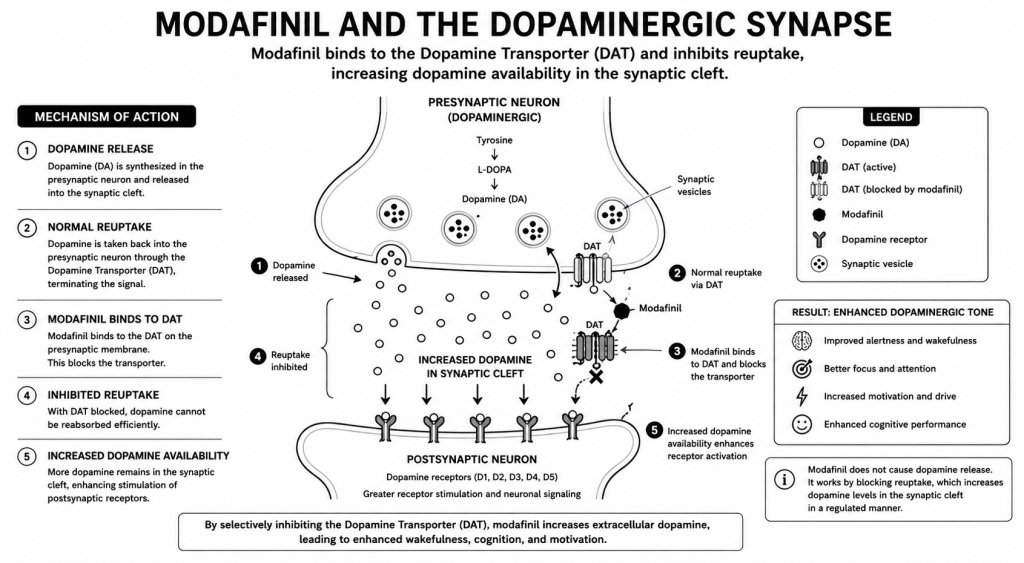
Clinical Evidence for Modafinil in ADHD
Pediatric Data
The most rigorous pediatric trial (Greenhill, 2006, Journal of the American Academy of Child & Adolescent Psychiatry) was a large, randomized, placebo-controlled study of Modafinil (170-425 mg) in children and adolescents with ADHD.
| Outcome | Result | Interpretation |
|---|---|---|
| ADHD-RS-IV Score Reduction | Significant vs. placebo | Modafinil is superior to placebo for core ADHD symptoms |
| Effect Size | Moderate (0.4-0.6) | Less potent than amphetamines (effect size 0.8-1.0) |
| Discontinuation Due to AEs | Higher than placebo | Rash, insomnia, irritability. One case of possible SJS led to non-approval |
| FDA Approval | Denied (2006) | Safety concerns (dermatologic) precluded pediatric indication |
Clinical Bottom Line: Modafinil is efficacious for pediatric ADHD, but the risk-benefit ratio was deemed unacceptable by the FDA due to rare but serious skin reactions. It is not approved for use in children and adolescents. This is a firm regulatory boundary.
Adult Data
Adult studies, while fewer and smaller, paint a more encouraging picture.
| Study | Population | Dose | Key Findings |
|---|---|---|---|
| Taylor & Russo (2000) | Adults with ADHD | 200-400 mg | Significant improvement in attention and hyperactivity. Well-tolerated. |
| Turner (2004) | Adults with ADHD | 200 mg | Improved response inhibition, working memory and cognitive flexibility. No effect on mood or anxiety. |
| Arnold (2012) | Adults with ADHD (flexible-dose) | 200-400 mg | Significant reduction in ADHD symptoms. Response rate ~50%. |
Synthesis:
- Efficacy: Modafinil is clearly superior to placebo and inferior to amphetamines in effect size.
- Tolerability: Significantly fewer cardiovascular side effects and no euphoria/crash.
- Role: Second- or third-line agent for adults who do not respond to or cannot tolerate first-line stimulants, or for whom stimulant misuse is a concern.
Clinical Pearl: The response to modafinil in ADHD is often dose-dependent and may require careful titration. Starting at 100 mg and increasing to 200 mg based on response and tolerability is a common strategy.
Patient Selection and Clinical Decision-Making
Good Candidates for a Modafinil Trial
| Patient Profile | Rationale | Clinical Considerations |
|---|---|---|
| Stimulant-intolerant | Significant anxiety, jitteriness, insomnia, or appetite suppression on amphetamines/methylphenidate | Modafinil’s cleaner dopaminergic profile often eliminates these side effects |
| Stimulant non-responder | Inadequate symptom control after adequate trials of two different stimulant classes | Different mechanism may capture non-responders |
| History of substance use disorder (SUD) | High risk of stimulant misuse/diversion | Schedule IV status and absence of euphoria make Modafinil a safer controlled-substance option |
| Comorbid fatigue/hypersomnia | ADHD + excessive daytime sleepiness (idiopathic hypersomnia, shift work) | Modafinil addresses both domains |
| Cardiovascular concerns | Mild-moderate hypertension; stimulant-induced tachycardia | Modafinil has a more favorable cardiovascular profile |
Poor Candidates (Relative Contraindications)
| Patient Profile | Risk | Clinical Action |
|---|---|---|
| Severe, classic hyperactivity/impulsivity | Modafinil’s effect size may be insufficient | First-line stimulants are more potent, consider as adjunctive therapy |
| History of psychosis or mania | Modafinil can precipitate psychotic/manic episodes | Avoid, monitor closely if used |
| Uncontrolled hypertension or cardiac arrhythmia | Modafinil still increases BP/HR | Address cardiovascular issues first |
| Pregnancy/Breastfeeding | Insufficient safety data | Avoid, consider alternatives |
| Concomitant hormonal contraceptive use (without backup) | Modafinil induces CYP3A4, reducing contraceptive efficacy | Mandatory non-hormonal backup method |
Dosing and Administration Protocol
Adult Off-Label Dosing Guidelines
| Phase | Dose | Timing | Duration | Monitoring |
|---|---|---|---|---|
| Initiation | 100 mg (half tablet) | 7:00-8:00 AM | 7 days | Assess tolerance, screen for anxiety, headache, insomnia |
| Titration | 200 mg | 7:00-8:00 AM | 4-6 weeks | Evaluate ADHD symptom response (ASRS scale) |
| Optimization | 200-400 mg* (rarely needed) | Divided dose? (AM + noon) | As needed | 400 mg is FDA max for narcolepsy, no evidence for superior ADHD efficacy |
| Non-response | Discontinue after 6-week adequate trial | N/A | N/A | Do not continue an ineffective medication indefinitely |
Critical Rule: No dosing after 12:00 PM. Half-life is 12-15 hours. Late dosing guarantees sleep disruption.
Clinical Pearl: Some patients benefit from splitting the dose: 100 mg in the morning and 100 mg at noon. This can help maintain coverage through the afternoon without causing evening insomnia. However, this strategy should only be used if the patient consistently experiences afternoon symptom breakthrough.
Defining an “Adequate Trial”
- Minimum: 4 weeks at 200 mg/day.
- Response: Clinically meaningful reduction in ADHD symptoms (>30% improvement on validated scale or patient-reported global improvement).
- Non-response: Switch to alternative agent. Do not escalate to 400 mg empirically.
Practical Administration Advice
Set an alarm 90 minutes before your planned wake-up time. Take the modafinil tablet with a full glass of water and return to sleep. By the time you actually wake up, the medication will be taking effect, helping you overcome morning inertia and start the day with improved focus.
If you experience difficulty staying awake in the afternoon, consider taking the medication at noon instead of morning. However, never take it after 2 PM to avoid insomnia.
Keep a daily journal of medication effects, side effects and symptom improvement. This information is invaluable for dose adjustment and clinical decision-making.
Comparative Effectiveness
Modafinil vs. Standard ADHD Pharmacotherapies
| Agent | Efficacy (Effect Size) | Onset | Duration | Abuse Liability | CV Side Effects | Anxiety/Insomnia | Cost |
|---|---|---|---|---|---|---|---|
| Amphetamine (Adderall) | High (0.8-1.0) | 30-60 min | 4-6h (IR); 10-12h (XR) | High (SII) | Moderate-High | Moderate-High | Low |
| Methylphenidate (Ritalin) | High (0.8-1.0) | 30-60 min | 3-4h (IR); 8-12h (XR) | High (SII) | Moderate | Moderate | Low |
| Modafinil | Moderate (0.4-0.6) | 60-90 min | 12-15h | Low (SIV) | Low | Low-Moderate | Moderate |
| Atomoxetine (Strattera) | Moderate (0.4-0.6) | 2-6 weeks | 24h (chronic) | None | Low-Moderate | Low | High |
| Guanfacine XR (Intuniv) | Low-Moderate | 1-2 weeks | 24h | None | Hypotension | Sedation | High |
| Viloxazine (Qelbree) | Moderate | 1-2 weeks | 24h | None | Low | Low | High |
Clinical Decision Algorithm
- First-line (unless contraindicated): Amphetamine or methylphenidate.
- Second-line (non-response/intolerance to stimulants):
- Consider Modafinil (especially if anxiety, insomnia, or SUD history)
- Consider Atomoxetine (if no acute effect needed)
- Third-line: Alpha-2 agonists, off-label antidepressants (bupropion, venlafaxine).
Safety, Monitoring, and Adverse Effects
Mandatory Pre-Treatment Screening
Before initiating modafinil, I recommend the following assessments:
- Blood pressure and heart rate: Baseline measurement.
- Hepatic function: If history of liver disease.
- Pregnancy test: For females of childbearing potential.
- Contraceptive counseling: CYP3A4 induction, backup method mandatory.
- Psychiatric history: Screen for psychosis/mania.
- Substance use history: Assess for current or past SUD.
Side Effect Management
| Side Effect | Frequency | Management |
|---|---|---|
| Headache | Common (10-20%) | Hydration, dose reduction, NSAIDs. Usually transient. |
| Insomnia | Common | AM-only dosing. If persists despite AM dosing, discontinue. |
| Anxiety/Jitteriness | Moderate (5-10%) | Reduce dose to 100 mg, eliminate caffeine. |
| GI discomfort | Mild | Take with food. |
| Dermatologic | Rare but serious | Any rash requires immediate discontinuation and medical evaluation. |
| CV (BP/HR elevation) | Mild-moderate | Monitor at follow-up. Discontinue if clinically significant. |
Clinical Pearl: The most common reason for discontinuing modafinil in my practice is not inefficacy but insomnia. Educating patients about the importance of morning-only dosing is essential. If insomnia persists despite strict morning dosing, consider reducing the dose or switching to a shorter-acting agent.
Serious Adverse Reactions
Stevens-Johnson Syndrome (SJS):
While the SJS risk is extremely rare (<1 in 100,000), it carries a black box warning in the approved labeling for narcolepsy. This risk must be communicated to patients. They should be instructed to discontinue the medication immediately at the first sign of rash, blistering, or mucosal involvement.
Psychiatric Effects:
Modafinil can precipitate or exacerbate psychosis, mania, depression or anxiety in vulnerable individuals. Patients with a history of psychiatric disorders should use modafinil with extreme caution, and those with active psychosis or mania are typically advised to avoid it entirely.
Drug Interactions
| Interaction | Mechanism | Clinical Action |
|---|---|---|
| Hormonal Contraceptives | CYP3A4 induction reduces estrogen levels | Mandatory non-hormonal backup method |
| Cyclosporine | Reduced levels | Monitor drug levels, adjust dose |
| Warfarin | Altered anticoagulation | Monitor INR, adjust dose |
| Antidepressants (SSRIs, TCAs) | Altered metabolism | Monitor for efficacy/toxicity |
| Antiepileptics (Phenytoin, Carbamazepine) | Reduced levels | Monitor drug levels |
| CNS Stimulants | Additive effects | Use with extreme caution |
Long-Term Management
Monitoring Schedule
| Timepoint | Recommended Actions |
|---|---|
| Baseline | Full history, blood pressure, ECG (for high-risk patients), pregnancy test (if applicable) |
| 2-4 Weeks | Assess response (ASRS scale), side effects, blood pressure |
| 3 Months | Comprehensive review, blood pressure, medication adherence |
| Every 6-12 Months | Continued benefit assessment, drug interaction review, dose adjustment if needed |
Tolerance and Dependence
Tolerance: May develop with daily use. Intermittent dosing (2-3 times/week) is strongly recommended for off-label cognitive enhancement. For FDA-indicated use, continuous dosing is appropriate under medical supervision.
Dependence: Mild physical dependence possible. Withdrawal manifests as rebound fatigue/sleepiness. Taper if discontinuing after chronic use.
Strategies to Minimize Tolerance:
- Drug holidays: Regular breaks from medication (weekends).
- Dose reduction: Periodic dose adjustments.
- Rotation: Consider switching to a different agent for periods.
- Lifestyle integration: Optimize sleep, diet and exercise to reduce medication needs.
Patient Education Points
Based on my experience counseling patients with ADHD, here are the most critical points to discuss:
Medication-Specific Education
- “Modafinil helps you focus; it does not replace sleep or good habits.”
- Understanding this distinction prevents unrealistic expectations.
- “Take it at the same time each morning.”
- Consistency improves effectiveness, timing avoids nighttime insomnia.
- “Never double up if you miss a dose.”
- This increases side effect risk without benefit.
- “If you’re on birth control, you need a backup method.”
- This interaction is often overlooked but critically important.
- “Report any rash or mood changes immediately.”
- Early recognition of rare side effects is essential.
Lifestyle Counseling
- Maintain a consistent sleep-wake schedule.
- This helps regulate circadian rhythm.
- Expose yourself to bright light upon awakening.
- Morning light therapy can be an adjunct to medication.
- Exercise regularly.
- Physical activity improves cognitive function and reduces ADHD symptoms.
- Consider cognitive behavioral therapy (CBT).
- CBT can help develop coping strategies and address anxiety/depression.
- Join a support group.
- Connecting with others who understand your challenges can be therapeutic.
Regulatory and Legal Considerations
Off-Label Prescribing: Why It Matters
Modafinil is not FDA-approved for ADHD. This is a historical and regulatory fact, not a statement on its efficacy.
Why wasn’t it approved?
- The 2006 pediatric trial revealed a rare but serious risk of Stevens-Johnson Syndrome (SJS).
- The FDA determined the risk-benefit ratio was unacceptable for a pediatric indication.
- Cephalon (manufacturer) did not pursue an adult indication.
Does this mean it is ineffective or unsafe in adults?
No. Adult data are consistently positive. The SJS risk is present but extremely rare (<1:100,000) and carries a black box warning in the approved labeling for narcolepsy. This risk must be communicated to patients, but it does not preclude rational off-label use in adults.
Clinical Reality: Hundreds of thousands of adults worldwide use Modafinil off-label for ADHD under medical supervision. The evidence supports this practice in selected patients.
Legal Considerations for Patients and Prescribers
- Prescription requirement: Modafinil is a Schedule IV controlled substance, requiring a prescription from a licensed medical provider.
- Off-label prescribing: It is legal and common, but requires informed consent and physician judgment.
- Drug testing: Modafinil is not typically included in standard 5-panel or 10-panel drug screens. However, specialized tests (forensic toxicology, military/aviation screens) include it.
Special Populations
Elderly Patients
Older adults are more sensitive to both therapeutic and adverse effects of modafinil:
- Start with 50-100 mg daily, titrate cautiously.
- Monitor for cognitive effects (disorientation, memory issues).
- Assess cardiovascular risk thoroughly before prescribing.
- Consider fall risk (dizziness, orthostatic hypotension).
Pregnant or Breastfeeding Women
Pregnancy Category C: Modafinil should be used during pregnancy only if the potential benefit justifies the potential risk to the fetus.
Breastfeeding: Modafinil is excreted in human milk in small amounts. A decision should be made whether to discontinue nursing or discontinue the drug.
Clinical Recommendation: Consult with a maternal-fetal medicine specialist before using modafinil in pregnancy. Consider alternatives (non-pharmacologic strategies, or alternative medications with better safety data).
Patients with Hepatic Impairment
Modafinil undergoes extensive hepatic metabolism. In patients with moderate to severe hepatic impairment:
- Reduce dose by 50% (start at 100 mg).
- Monitor carefully for accumulation and adverse effects.
- Consider alternative medications if hepatic function is severely compromised.
Future Directions and Emerging Research
Promising Areas of Investigation
Genetic Studies: Ongoing genetic research is identifying potential polymorphisms that influence response to modafinil, which may lead to more targeted therapies.
Combination Therapy Studies: Research is investigating whether combining modafinil with other agents (alpha-2 agonists, antidepressants) provides more effective symptom control than monotherapy.
Long-Term Safety Studies: Extended follow-up studies are needed to assess the long-term cardiovascular, psychiatric and cognitive effects of modafinil use in ADHD.
Digital Health Integration: Studies are exploring the role of digital monitoring and cognitive training as adjuncts to pharmacotherapy.
The Role of Patient Advocacy
Organizations like CHADD (Children and Adults with Attention-Deficit/Hyperactivity Disorder) and the ADHD Foundation continue to advocate for increased research funding and awareness of ADHD. Patients are encouraged to participate in patient registries and clinical trials to advance our understanding and treatment of this challenging condition.
Summary and Clinical Recommendations
Key Takeaways for Clinicians
- Proper Patient Selection: Modafinil is not for everyone. Target patients who are stimulant-intolerant, stimulant non-responders or at risk for substance abuse.
- Informed Consent: Discuss the off-label nature, potential side effects (including SJS risk) and drug interactions (especially contraceptives).
- Conservative Dosing: Start low (100 mg) and go slow. Most patients respond to 200 mg daily.
- Morning-Only Dosing: This is essential to prevent insomnia. Patients should never take modafinil after 12 PM.
- Regular Monitoring: Assess efficacy, side effects and vital signs at each visit. Monitor for tolerance and dependence.
- Comprehensive Approach: Medication is one tool. Encourage sleep hygiene, exercise and cognitive behavioral strategies.
- Shared Decision-Making: Involve patients in treatment decisions. Discuss risks, benefits and alternatives.
Key Takeaways for Patients
- Understand the Off-Label Status: Modafinil is not FDA-approved for ADHD, but it is a legal and commonly prescribed option.
- Be Patient: It may take several weeks to see the full benefit. An adequate trial is essential.
- Timing is Everything: Take modafinil in the morning. Late dosing will disrupt your sleep.
- Monitor Side Effects: Report any rash, mood changes or cardiovascular symptoms immediately.
- Use It Wisely: Modafinil is not a substitute for sleep, good nutrition or exercise.
- Be Honest: Share your full medical history, including substance use, with your provider.
Conclusion
Modafinil is not a first-line ADHD treatment. It is not a replacement for amphetamines in patients who are responding well and tolerating them. But it is an indispensable option in the therapeutic armamentarium.
For the patient who:
- Lies awake at night from stimulant-induced insomnia.
- Feels their anxiety skyrocket with Adderall.
- Has a history of substance abuse and fears the Schedule II label.
- Experiences a “crash” that leaves them non-functional by afternoon.
- Simply does not respond adequately to standard therapies.
Modafinil is not a compromise. It is a solution.
The clinical community must move beyond the binary thinking of “stimulants vs. non-stimulants” and recognize Modafinil for what it is: a unique pharmacological entity with a distinct mechanism, a favorable safety profile and a legitimate, evidence-supported role in the management of adult ADHD.
FAQ
Is Modafinil safe for children with ADHD?
No. The FDA specifically considered and rejected this indication due to safety concerns. Do not use Modafinil in children or adolescents for ADHD.
Will Modafinil show up on a drug test for ADHD medication?
Yes, if the test includes Modafinil. Standard employer drug screens (5-panel, 10-panel) do not typically test for Modafinil. However, specialized forensic toxicology and military/aviation screens do include it. A positive result requires a valid prescription.
What should I do if I miss a dose?
Take it as soon as you remember, unless it’s close to bedtime. If it’s within 2-3 hours of bedtime, skip the dose to avoid insomnia. Do not double up.
Can I drink alcohol while taking Modafinil?
Alcohol should be used cautiously, if at all, during modafinil treatment. The combination can enhance side effects, including dizziness, confusion and impaired judgment. It may also reduce the medication’s effectiveness and worsen sleep quality.
What are the signs of an allergic reaction?
Signs include: rash, hives, swelling of the face/lips/tongue, difficulty breathing or fever. Seek emergency medical attention immediately if any of these occur.
‼️ Disclaimer: The information provided in this article about modafinil is intended for informational purposes only and is not a substitute for professional medical consultation or recommendations. The author of the article are not responsible for any errors, omissions, or actions based on the information provided.
References:
- Barry RJ, Clarke AR. Johnstone SJ. A review of electrophysiology in attention-deficit/hyperactivity disorder: I. Qualitative and quantitative electroencephalography. Clin Neurophysiol. 2003
- Clarke AR, Barry RJ, Bond D. Effects of stimulant medication on the EEG of children with attention-deficit/hyperactivity disorder. Psychopharmacol. 2002
- C. Andrade. Antipsychotic augmentation with modafinil or armodafinil for negative symptoms of schizophrenia: systematic review and meta-analysis of randomized controlled trials. J. Psychiatr. 2015
- S.C. Cohen. Meta-analysis: risk of tics associated with psychostimulant use in randomized, placebo-controlled trials J. Am. Acad. Child. Adolesc. Psychiatry. 2015
- L.L. Greenhill. A randomized, double-blind, placebo-controlled study of modafinil film-coated tablets in children and adolescents with attention-deficit/hyperactivity disorderJ. Am. Acad. Child Adol esc. Psychiatry. 2006
- C. Han. The potential role of atypical antipsychotics for the treatment of posttraumatic stress disorder J. Psychiatr. 2014
- Y.C. Kuan. Effects of modafinil and armodafinil in patients with obstructive sleep apnea: a meta-analysis of randomized controlled trials Clin. 2016
- A. Thapar. Attention deficit hyperactivity disorder Lancet. 2016