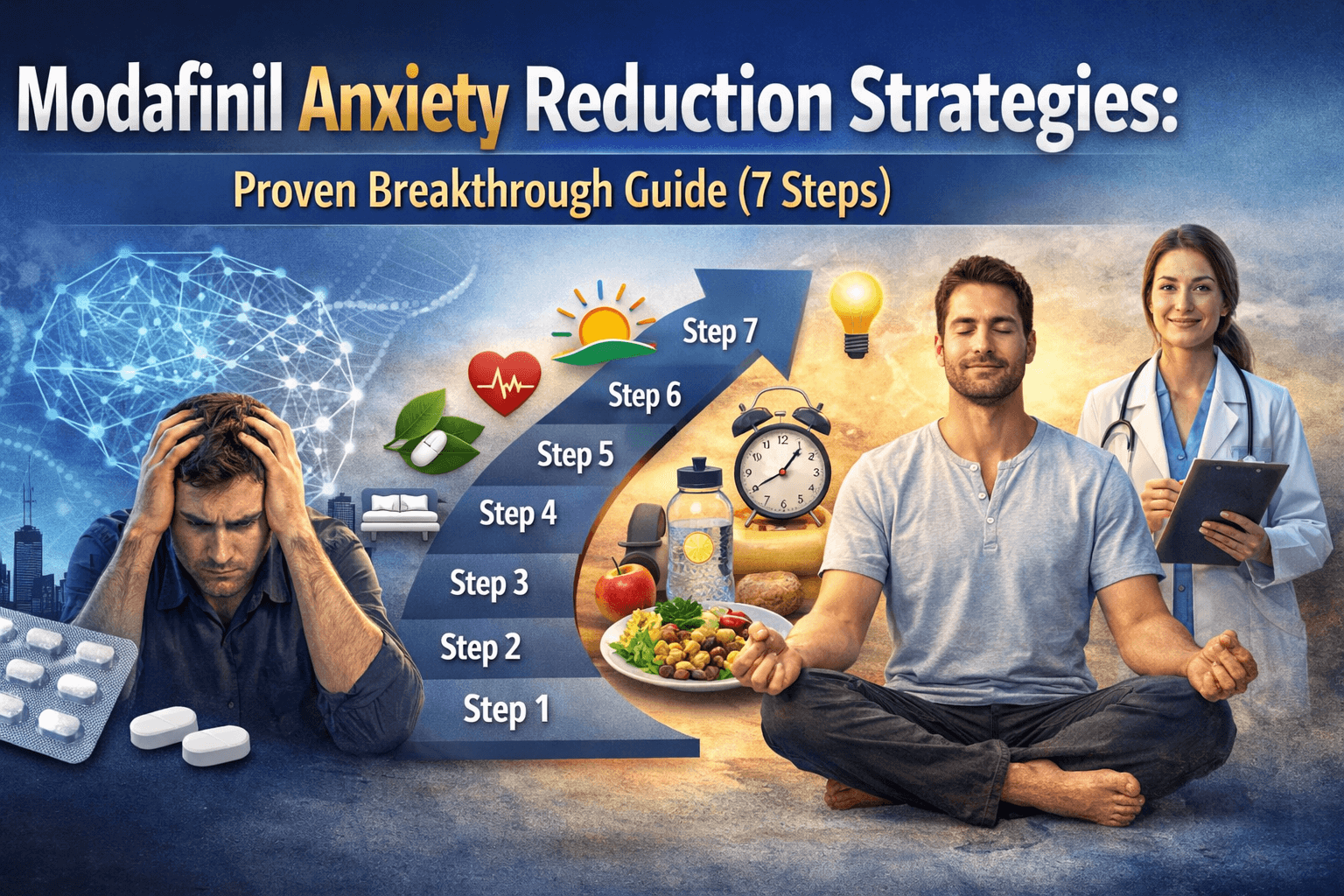
Modafinil anxiety reduction strategies are increasingly relevant as more people use modafinil to support wakefulness, attention, and productivity. While many users report enhanced clarity and sustained focus, some also experience nervousness, restlessness, or heightened anxiety. The good news is that these effects are often manageable. With the right approach, modafinil anxiety reduction strategies can help balance cognitive benefits with emotional well-being.
This guide takes a clear, practical look at why anxiety can appear, how to reduce it, and how to use modafinil more responsibly. The tone is straightforward, the language is accessible, and the goal is simple: help you make informed, safer decisions.
Understanding Modafinil and Anxiety Dynamics
What Modafinil Is and How It Works
Modafinil is a wakefulness-promoting compound commonly prescribed for conditions such as narcolepsy and shift work sleep disorder. Off-label, it’s often discussed for its effects on alertness and executive function. Unlike classic stimulants, modafinil works through multiple neurotransmitter systems, including dopamine, norepinephrine, histamine, and orexin.
This broad mechanism explains why users often feel “awake but calm.” However, the same pathways that enhance alertness can also increase physiological arousal. When arousal exceeds comfort, anxiety may follow. Understanding this balance is central to effective modafinil anxiety reduction strategies.
Why Anxiety Can Occur With Modafinil
Anxiety linked to modafinil is usually situational rather than chronic. Common contributing factors include:
- Excessive dosage relative to tolerance
- Poor sleep quality before use
- High baseline stress or anxiety traits
- Concurrent stimulant intake, especially caffeine
In short, modafinil can amplify what’s already there. If the nervous system is under strain, the effects may feel edgy instead of smooth.
Risk Factors That Increase Anxiety
Certain individuals are more likely to notice anxiety symptoms. These include people with a history of anxiety disorders, those sensitive to stimulants, and users who combine modafinil with other activating substances. Recognizing these risk factors early supports smarter modafinil anxiety reduction strategies and prevents unnecessary discomfort.
Practical Modafinil Anxiety Reduction Strategies
Effective modafinil anxiety reduction strategies focus on adjustment, not elimination. The objective is to preserve benefits while dialing down unwanted effects.
Dose Timing and Scheduling
One of the most overlooked factors is timing. Taking modafinil too late in the day can interfere with sleep, which in turn raises anxiety the following day. Many users find that earlier dosing supports smoother energy curves.
Key timing considerations include:
- Use the lowest effective dose
- Take modafinil early in the morning
- Avoid split dosing unless medically advised
Gradual titration allows the body to adapt, reducing the likelihood of overstimulation.
Lifestyle and Behavioral Adjustments
Lifestyle choices matter more than many expect. Modafinil anxiety reduction strategies work best when paired with supportive daily habits.
Helpful adjustments include:
- Structured work blocks with breaks
- Light physical activity to release tension
- Stress-management practices such as breathing exercises
These aren’t complicated interventions, but they’re effective because they regulate the nervous system’s baseline state.
Nutrition, Hydration, and Supplements
Diet plays a subtle but meaningful role. Skipping meals or becoming dehydrated can mimic or worsen anxiety symptoms. Balanced nutrition stabilizes blood sugar, which supports emotional regulation.
Caffeine Management
Caffeine is a frequent culprit. Combining it with modafinil can push stimulation too far. Many users benefit from reducing or eliminating caffeine on modafinil days as part of their modafinil anxiety reduction strategies.
Sleep Optimization
Sleep is non-negotiable. Even mild sleep debt increases anxiety risk. Maintaining consistent sleep schedules and prioritizing recovery improves both mood and cognitive performance.
For general sleep hygiene guidance, resources like the Sleep Foundation provide practical, evidence-based recommendations.
Long-Term Optimization and Safety Considerations
Monitoring Mental Health Signals
Long-term success depends on awareness. Keep track of mood changes, irritability, or persistent nervousness. Occasional anxiety is manageable; sustained distress is a signal to reassess.
Simple tracking methods include:
- Brief daily mood notes
- Weekly self-check-ins
- Monitoring sleep quality trends
These practices strengthen self-regulation and improve outcomes.
When to Adjust or Discontinue
If anxiety persists despite adjustments, reducing the dose or pausing use may be appropriate. Modafinil anxiety reduction strategies are not about pushing through discomfort. They’re about aligning use with well-being.
Discontinuation is especially important if anxiety escalates into panic, insomnia, or depressive symptoms.
Working With Healthcare Professionals
Medical guidance matters. A qualified healthcare professional can help assess whether modafinil is appropriate and suggest alternatives if needed. Transparency about side effects leads to better, safer outcomes and reinforces responsible use.
FAQ
1. Are modafinil anxiety reduction strategies effective for everyone?
They are effective for many users, but individual responses vary. Personal sensitivity, lifestyle, and baseline anxiety all influence results.
2. Can lowering the dose really reduce anxiety?
Yes. Dose reduction is one of the most reliable modafinil anxiety reduction strategies and often resolves symptoms quickly.
3. Is modafinil safer than traditional stimulants for anxiety?
For some people, yes. Modafinil is generally less jittery, but it can still trigger anxiety in sensitive individuals.
4. Should modafinil be avoided if I have anxiety?
Not necessarily, but caution is advised. Professional guidance is strongly recommended.
5. Does hydration actually make a difference?
It does. Dehydration can mimic anxiety symptoms such as rapid heartbeat and restlessness.
6. How long does modafinil-related anxiety last?
When managed properly, it’s usually short-lived. Persistent anxiety suggests the need for reassessment.
Conclusion
Modafinil anxiety reduction strategies are about balance, awareness, and thoughtful use. Modafinil can be a valuable tool, but it’s not a shortcut that ignores the body’s limits. By adjusting dose, timing, lifestyle, and expectations, many users achieve sustained focus without unnecessary stress.
Approached responsibly, modafinil anxiety reduction strategies support both productivity and mental well-being. The key is listening to signals early and responding with informed, measured changes.
‼️ Disclaimer: The information provided in this article about modafinil is intended for informational purposes only and is not a substitute for professional medical consultation or recommendations. The author of the article are not responsible for any errors, omissions, or actions based on the information provided.
References:
- McClellan, K. J., & Spencer, C. M. Modafinil: A review of its pharmacology and clinical efficacy in the management of narcolepsy. CNS Drugs, 311–324. https://doi.org/10.2165/00023210-199809040-00006 . 1998.
- Willavize, S. A., Nichols, A. I., & Lee, J. Population pharmacokinetic modeling of armodafinil and its major metabolites. https://doi.org/10.1002/jcph.800 . 2016
- U.S. Food and Drug Administration. PROVIGIL. U.S. Department of Health and Human Services. https://www.accessdata.fda.gov/drugsatfda_docs/label/2015/020717s037s038lbl.pdf . 2015
- Gilleen, J., Michalopoulou, P. G., Reichenberg, A., Drake, R., Wykes, T., Lewis, S. W., & Kapur, S. Modafinil combined with cognitive training is associated with improved learning in healthy volunteers a randomised controlled trial. European Neuropsychopharmacology. 529–539. https://doi.org/10.1016/j.euroneuro.2014.01.001 . 2014
- Greenblatt, K., Adams, N. Modafinil. StatPearls Publishing. https://www.ncbi.nlm.nih.gov/books/NBK531476/ . 2025
- Oliva Ramirez A, Keenan A, Kalau O, Worthington E, Cohen L, Singh S. Prevalence and burden of multiple sclerosis-related fatigue: a systematic literature review. https://doi.org/10.1186/s12883-021-02396-1 . 2021.
- Mereu, M., Bonci, A., Newman, A. H., & Tanda, G. The neurobiology of modafinil as an enhancer of cognitive performance and a potential treatment for substance use disorders. https://doi.org/10.1007/s00213-013-3232-4 . 2013
- Ciancio A, Moretti MC, Natale A, Rodolico A, Signorelli MS, Petralia A. Personality Traits and Fatigue in Multiple Sclerosis: A Narrative Review. Journal of Clinical Medicine. https://doi.org/10.3390/jcm12134518 . 2023
- Natsch, A. What makes us smell: The biochemistry of body odour and the design of new deodorant ingredients. CHIMIA International Journal for Chemistry. https://doi.org/10.2533/chimia.2015.414 . 2015
- Hamada, K., Haruyama, S., Yamaguchi, T., Yamamoto, K., Hiromasa, K., Yoshioka, M., Nishio, D., & Nakamura, M. What determines human body odour? Experimental Dermatology. https://doi.org/10.1111/exd.12380 . 2014