Modafinil has become one of the most talked-about compounds in modern productivity and cognitive performance discussions. In a fast-paced world, people are searching for tools that help them stay alert, confident, and mentally present. Modafinil often enters that conversation not as a miracle pill, but as a carefully researched pharmaceutical with specific, documented effects.
Explores Modafinil in depth, using a balanced, evidence-informed lens. We will look at how it works, why people use it, and how it fits into broader conversations about responsibility, ethics, and self-improvement. Throughout, Modafinil is discussed as a tool not a substitute for discipline, rest, or purpose.
Understanding Modafinil
What Modafinil Is
Modafinil is a prescription medication primarily indicated for sleep-related disorders such as narcolepsy, shift work sleep disorder, and obstructive sleep apnea related fatigue. Unlike traditional stimulants, it is classified as a wakefulness-promoting agent. That distinction matters because Modafinil does not typically produce the jitteriness or crash associated with amphetamines.
At its core, Modafinil supports sustained alertness. Many users describe a calm, steady focus rather than an artificial surge of energy. This characteristic has contributed to its reputation among professionals, students, and researchers.
History and Development
Modafinil was developed in France in the late 20th century and later approved by regulatory authorities in multiple countries. Its adoption was driven by clinical need, not lifestyle experimentation. Over time, off-label interest grew as researchers observed its cognitive effects in healthy individuals.
Today, Modafinil is one of the most studied cognitive enhancers, with decades of peer-reviewed literature supporting both its efficacy and limitations.
How It Works in the Brain
While the exact mechanism is still being studied, Modafinil is known to influence several neurotransmitter systems, including dopamine, norepinephrine, and orexin. Rather than flooding the brain, it subtly adjusts signaling pathways associated with alertness and executive function.
This nuanced action explains why Modafinil feels different from caffeine or stronger stimulants. The mind stays awake, but not overstimulated.
Legal and Medical Status
Modafinil is prescription-only in many jurisdictions. That status reflects both its medical value and the need for professional oversight. Anyone considering Modafinil should consult a qualified healthcare provider and follow local regulations.
Benefits and Practical Uses of Modafinil
Cognitive Performance
One of the most cited benefits of Modafinil is improved attention span. Tasks that require sustained concentration reading, analysis, coding often feel more manageable. Users report fewer mental lapses and improved task completion.
Memory consolidation may also benefit indirectly. When focus improves, learning efficiency often follows.
Workplace Productivity
In professional environments, Modafinil is sometimes associated with long-form problem-solving and strategic thinking. It does not create ideas, but it may reduce mental friction that slows execution.
Importantly, Modafinil is not about working longer hours indiscriminately. Many users report better quality output within normal work periods.
Emotional Regulation
While Modafinil is not an antidepressant, some users describe increased emotional steadiness. Reduced fatigue can improve patience, confidence, and decision-making under pressure.
That emotional clarity contributes to the perception of “being yourself,” as mental noise is reduced.
Common Use Cases
- Medical patients managing excessive daytime sleepiness
- Professionals in high-focus roles
- Researchers and academics
- Individuals working irregular schedules
For authoritative medical information, refer to established sources such as the Mayo Clinic’s overview of Modafinil and its clinical uses.
Safety, Risks, and Responsible Use
Dosage Overview
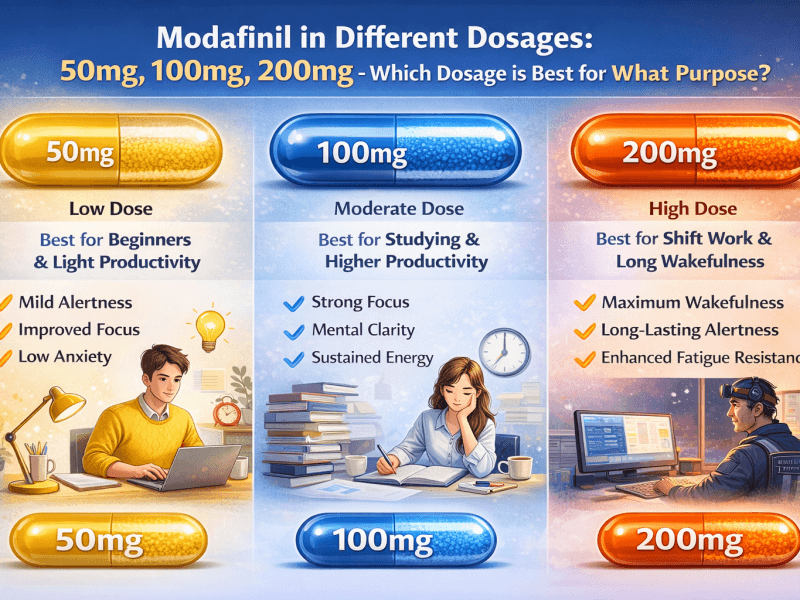
Typical prescribed dosages range from 100 mg to 200 mg daily. Higher doses do not necessarily produce better results and may increase side effects. Responsible use emphasizes the lowest effective dose.
Side Effects
Common side effects include headaches, nausea, and mild anxiety. Serious adverse reactions are rare but possible. Discontinuation and medical consultation are advised if unusual symptoms occur.
Interactions and Contraindications
Modafinil may interact with hormonal contraceptives and certain medications. Individuals with cardiovascular conditions or liver issues should exercise particular caution.
Ethical and Social Considerations
The use of Modafinil raises ethical questions around fairness and access. While legal with prescription, its off-label use invites debate. Transparency and personal responsibility remain essential.
Modafinil and Personal Growth
The Psychology of Performance
Performance is not purely biochemical. Modafinil may support focus, but mindset, habits, and values still drive outcomes. Used thoughtfully, it can reinforce not replace personal discipline.
Courage and Authenticity
The phrase “courage to be yourself” reflects autonomy. For some, Modafinil reduces fatigue-related inhibition, allowing clearer expression of skills and personality already present.
Alternatives and Complements
Non-pharmaceutical approaches such as sleep hygiene, exercise, mindfulness, and nutrition should always form the foundation. Modafinil, if used, works best within a holistic framework.
FAQ
Is Modafinil addictive?
Modafinil has a lower abuse potential than traditional stimulants, but misuse is still possible.
Can Modafinil replace sleep?
No. Modafinil supports wakefulness but does not substitute for restorative sleep.
Is Modafinil safe long-term?
Long-term studies suggest reasonable safety under medical supervision, though ongoing evaluation is recommended.
Does Modafinil improve intelligence?
It does not increase intelligence but may enhance focus and task execution.
Who should not use Modafinil?
Individuals with certain medical conditions or medication interactions should avoid it unless advised otherwise by a physician.
Is Modafinil legal everywhere?
No. Legal status varies by country and typically requires a prescription.
Conclusion
Modafinil occupies a unique space between medicine and modern performance culture. When approached responsibly, it can support alertness, clarity, and confidence. However, it is not a shortcut to success or authenticity. True growth still depends on values, effort, and informed decision-making. Modafinil, at best, is a supporting actor in a much larger personal narrative.
‼️ Disclaimer: The information provided in this article about modafinil is intended for informational purposes only and is not a substitute for professional medical consultation or recommendations. The author of the article are not responsible for any errors, omissions, or actions based on the information provided.
References:
- McClellan, K. J., & Spencer, C. M. Modafinil: A review of its pharmacology and clinical efficacy in the management of narcolepsy. CNS Drugs, 311–324. https://doi.org/10.2165/00023210-199809040-00006 . 1998.
- Willavize, S. A., Nichols, A. I., & Lee, J. Population pharmacokinetic modeling of armodafinil and its major metabolites. https://doi.org/10.1002/jcph.800 . 2016
- U.S. Food and Drug Administration. PROVIGIL. U.S. Department of Health and Human Services. https://www.accessdata.fda.gov/drugsatfda_docs/label/2015/020717s037s038lbl.pdf . 2015
- Gilleen, J., Michalopoulou, P. G., Reichenberg, A., Drake, R., Wykes, T., Lewis, S. W., & Kapur, S. Modafinil combined with cognitive training is associated with improved learning in healthy volunteers a randomised controlled trial. European Neuropsychopharmacology. 529–539. https://doi.org/10.1016/j.euroneuro.2014.01.001 . 2014
- Greenblatt, K., Adams, N. Modafinil. StatPearls Publishing. https://www.ncbi.nlm.nih.gov/books/NBK531476/ . 2025
- Oliva Ramirez A, Keenan A, Kalau O, Worthington E, Cohen L, Singh S. Prevalence and burden of multiple sclerosis-related fatigue: a systematic literature review. https://doi.org/10.1186/s12883-021-02396-1 . 2021.
- Mereu, M., Bonci, A., Newman, A. H., & Tanda, G. The neurobiology of modafinil as an enhancer of cognitive performance and a potential treatment for substance use disorders. https://doi.org/10.1007/s00213-013-3232-4 . 2013
- Ciancio A, Moretti MC, Natale A, Rodolico A, Signorelli MS, Petralia A. Personality Traits and Fatigue in Multiple Sclerosis: A Narrative Review. Journal of Clinical Medicine. https://doi.org/10.3390/jcm12134518 . 2023
- Natsch, A. What makes us smell: The biochemistry of body odour and the design of new deodorant ingredients. CHIMIA International Journal for Chemistry. https://doi.org/10.2533/chimia.2015.414 . 2015
- Hamada, K., Haruyama, S., Yamaguchi, T., Yamamoto, K., Hiromasa, K., Yoshioka, M., Nishio, D., & Nakamura, M. What determines human body odour? Experimental Dermatology. https://doi.org/10.1111/exd.12380 . 2014