Introduction to Modafinil
What Is Modafinil?
Modafinil is a prescription wakefulness-promoting agent originally developed to treat sleep disorders such as narcolepsy, shift work sleep disorder, and obstructive sleep apnea. Over time, it gained a reputation far beyond the medical world. Today, it is widely discussed as a cognitive enhancer, productivity aid, and fatigue-fighting tool.
Think of Modafinil as a mental dimmer switch rather than a floodlight. It does not overwhelm your brain with stimulation. Instead, it gently turns up alertness, focus, and mental clarity.
Why Modafinil Is Popular Worldwide
Why do professionals, students, and night-shift workers talk about Modafinil so much? Simple. It helps people stay awake and sharp without the jittery chaos of caffeine or traditional stimulants. When dosed correctly, it feels clean, controlled, and predictable.
But dosage is everything. A little can feel just right. Too much can feel like overkill.
How Modafinil Works in the Brain
Mechanism of Action Explained Simply
Modafinil works by influencing several neurotransmitters at once. Instead of forcing stimulation, it nudges your brain into a more alert state. It increases dopamine availability while also interacting with norepinephrine, histamine, and orexin pathways.
In practical terms? Your brain stays awake, focused, and resistant to fatigue.
Dopamine, Orexin, and Wakefulness
Orexin is a key player in regulating wakefulness. Modafinil supports this system, which is why users often report sustained alertness without emotional highs or crashes. It is like upgrading your brain’s endurance rather than its speed.
Understanding Modafinil Dosages
Why Dosage Matters
Modafinil is not a “more is better” substance. Different dosages produce very different experiences. The right dose depends on sensitivity, body weight, purpose, and experience level.
Factors That Influence the Right Dose
Your ideal dose depends on:
- Natural stimulant sensitivity
- Sleep quality
- Purpose (study, work, shift coverage)
- Experience with Modafinil
Choosing wisely avoids unnecessary side effects.
Modafinil 50 mg – The Low-Dose Approach
Who Should Consider 50mg?
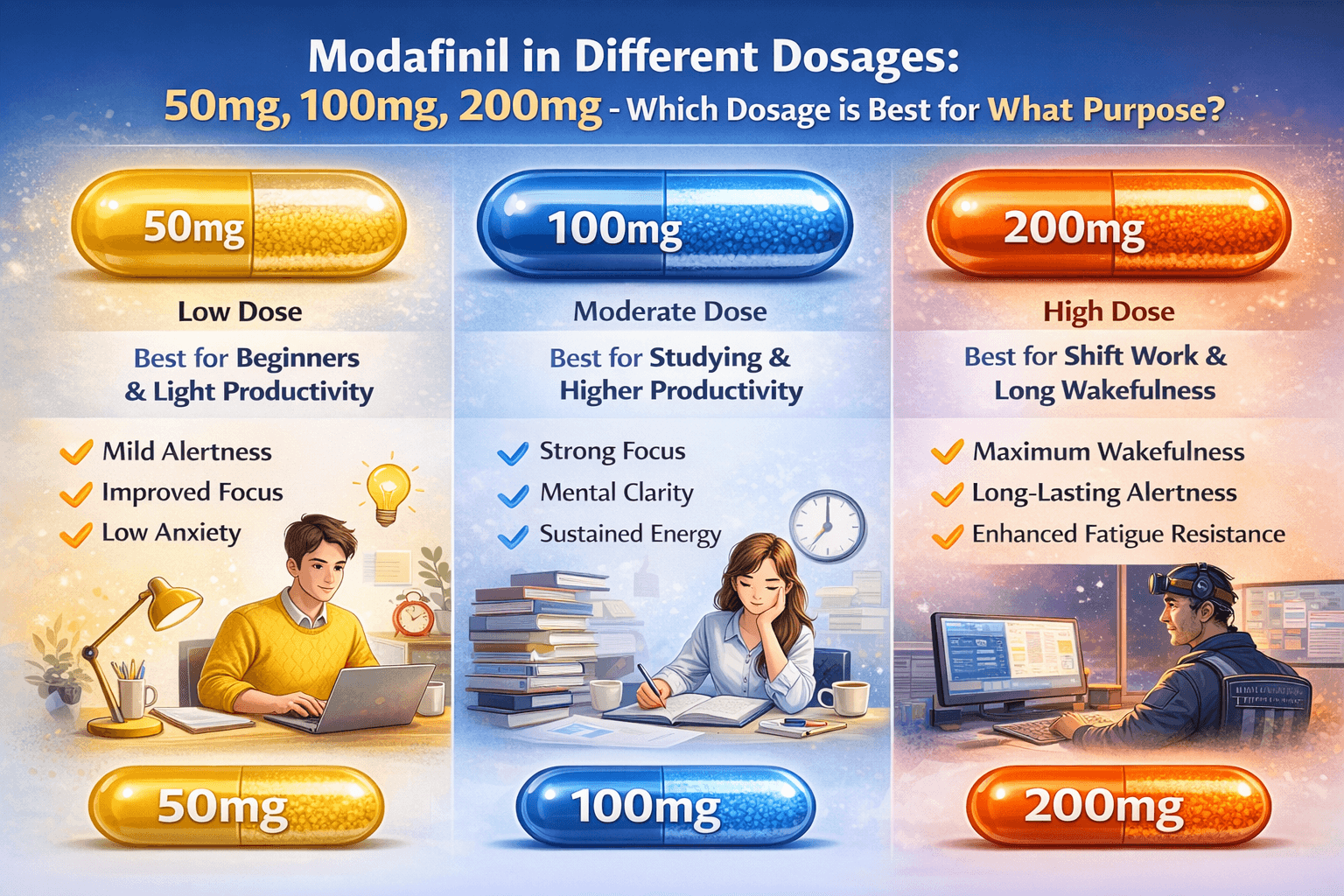
50mg is ideal for beginners, stimulant-sensitive individuals, or those who want a subtle cognitive lift. It is often underestimated but surprisingly effective for many people.
Benefits of 50 Modafinil
At 50 mg, users often report:
- Mild alertness
- Improved concentration
- Reduced mental fatigue
- Minimal side effects
It feels like a strong cup of coffee without anxiety.
Ideal Use Cases for 50mg
50 works well for:
- Light study sessions
- Desk work
- Mild sleep deprivation
- First-time users
Potential Downsides of Low Dosage
For demanding tasks or long wake periods, 50 mg may feel insufficient. Some users notice focus fades earlier in the day.
Modafinil 100mg – The Balanced Standard
Why 100 Is the Most Common Dose
100 mg is the sweet spot for most users. It offers noticeable cognitive enhancement without overwhelming stimulation.
Cognitive and Productivity Benefits
At 100mg, users often experience:
- Strong focus
- Clear thinking
- Improved task initiation
- Sustained energy for 8-12 hours
This dose feels like your brain on its best day.
Best Scenarios for 100 mg Use
100 is ideal for:
- Studying and exams
- Office work
- Creative tasks
- Moderate sleep loss
Side Effects at 100mg
Side effects are usually mild but may include headache or reduced appetite, especially if hydration is neglected.
Modafinil 200mg – The Maximum Therapeutic Dose
Who Needs 200 mg Modafinil?
200 is typically reserved for individuals with diagnosed sleep disorders or those facing extreme fatigue. It is powerful and long-lasting.
Performance and Wakefulness Effects
At this dose, Modafinil can:
- Eliminate sleepiness
- Sustain focus for 12-15 hours
- Support overnight wakefulness
When 200mg Makes Sense
200 is best for:
- Shift workers
- Long-haul travel and jet lag
- Severe sleep deprivation
Risks and Side Effects at Higher Doses
Higher doses increase the risk of:
For many users, it is simply more than needed.
Comparing 50mg vs 100mg vs 200mg
Effectiveness Comparison
- 50mg: Subtle, controlled, beginner-friendly
- 100mg: Balanced, versatile, optimal for most users
- 200mg: Intense, long-lasting, situational
Side Effect Profile Comparison
Side effects increase with dosage. Lower doses generally offer the best benefit-to-risk ratio.
Which Dosage Fits Which Lifestyle?
Casual productivity favors 50-100 mg. Demanding schedules may justify 200 mg.
| Dosage | Strength Level | Best For | Primary Benefits | Duration of Effects | Common Side Effects | Who Should Avoid It |
|---|---|---|---|---|---|---|
| 50 mg | Low | Beginners, stimulant-sensitive users, light productivity | Mild alertness, improved focus, low anxiety, minimal stimulation | 6-8 hours | Rare headaches, slight appetite suppression | Users needing extreme wakefulness or long overnight focus |
| 100 mg | Moderate (Standard) | Students, professionals, everyday productivity | Strong focus, mental clarity, sustained energy, improved motivation | 8-12 hours | Headache, dry mouth, reduced appetite (usually mild) | Highly stimulant-sensitive individuals |
| 200 mg | High (Maximum therapeutic dose) | Shift workers, severe sleep deprivation, jet lag | Maximum wakefulness, long-lasting alertness, fatigue resistance | 12-15 hours | Insomnia, anxiety, elevated heart rate, restlessness | Beginners, anxiety-prone users, those with heart issues |
Modafinil for Specific Purposes
Modafinil for Studying and Exams
100mg is typically ideal. It supports focus without overstimulation.
Modafinil for Work and Productivity
For office or creative work, 50 – 100 mg provides clarity and motivation.
Modafinil for Shift Work and Jet Lag
200 may be appropriate when sleep disruption is unavoidable.
Modafinil for Long Wakefulness Periods
Split dosing (100 + 50 later) is often smarter than a single high dose.
Quick Dosage Recommendation Guide
| Purpose | Recommended Dosage |
|---|---|
| Light focus or desk work | 50 mg |
| Studying and exams | 100 mg |
| Office productivity | 100 mg |
| Creative or analytical work | 100 mg |
| Shift work or overnight alertness | 200 mg |
| Jet lag management | 100-200 mg |
| First-time use | 50 mg |
Tolerance, Dependency, and Cycling Dosages
Can You Build Tolerance to Modafinil?
Tolerance is possible with daily use. Cycling days off helps maintain effectiveness.
Smart Dosage Cycling Strategies
Many users rotate between 50 mg and 100 mg depending on workload.
How to Choose the Right Modafinil Dosage
Beginner vs Experienced Users
Beginners should always start low. Experienced users often find lower doses remain effective.
Listening to Your Body
Your body gives feedback. Respect it.
Safety Tips and Best Practices
Timing Your Dose Correctly
Take Modafinil early in the day to avoid insomnia.
Avoiding Common Mistakes
Avoid combining with excessive caffeine or taking it too late.
Conclusion
Modafinil is not about pushing harder. It is about working smarter. For most people, 100 mg delivers the best balance of focus, energy, and safety. 50 mg is perfect for subtle enhancement, while 200 mg should be reserved for exceptional circumstances. The best dosage is the one that supports your goals without creating unnecessary strain.
FAQ
1. Is 50 mg of Modafinil effective?
Yes, especially for beginners and light cognitive tasks.
2. Is 100 mg Modafinil safe for daily use?
Generally yes, when used responsibly and not continuously.
3. Is 200 mg too much for beginners?
For most beginners, yes. It is better to start lower.
4. Can I split a 200 mg pill?
Yes, many users split doses for better control.
5. Which Modafinil dosage is best for productivity?
For most users, 100mg offers the best productivity boost.
‼️ Disclaimer: The information provided in this article about modafinil is intended for informational purposes only and is not a substitute for professional medical consultation or recommendations. The author of the article are not responsible for any errors, omissions, or actions based on the information provided.
References:
- U.S. Food and Drug Administration. PROVIGIL. U.S. Department of Health and Human Services. https://www.accessdata.fda.gov/drugsatfda_docs/label/2015/020717s037s038lbl.pdf . 2015
- Ballon JS, Feifel D. A systematic review of modafinil: potential clinical uses and mechanisms of action. J Clin Psychiatry. 2006
- Willavize, S. A., Nichols, A. I., & Lee, J. Population pharmacokinetic modeling of armodafinil and its major metabolites. https://doi.org/10.1002/jcph.800 . 2016
- Fuxe K, et al. Modafinil enhances the increase of extracellular serotonin levels induced by the antidepressant drugs fluoxetine and imipramine: a dual probe microdialysis study in awake rat. Synapse. 2005
- Mechanisms of modafinil: A review of current research. nih.gov. 2007
- PROVIGIL (modafinil) Tablets. FDA.GOV. 2010
- Oliva Ramirez A, Keenan A, Kalau O, Worthington E, Cohen L, Singh S. Prevalence and burden of multiple sclerosis-related fatigue: a systematic literature review. 2021.
- Ciancio A, Moretti MC, Natale A, Rodolico A, Signorelli MS, Petralia A. Personality Traits and Fatigue in Multiple Sclerosis: A Narrative Review. Journal of Clinical Medicine. 2023
- Mereu, M., Bonci, A., Newman, A. H., & Tanda, G. The neurobiology of modafinil as an enhancer of cognitive performance and a potential treatment for substance use disorders. https://doi.org/10.1007/s00213-013-3232-4 . 2013
- Woo, J., & Verduzco-Gutierrez, M. Traumatic brain injury: An overview of epidemiology, pathophysiology, and medical management. Medical Clinics of North America. https://doi.org/10.1016/j.mcna.2019.11.001 . 2020
- Oliva Ramirez A, Keenan A, Kalau O, Worthington E, Cohen L, Singh S. Prevalence and burden of multiple sclerosis-related fatigue: a systematic literature review. https://doi.org/10.1186/s12883-021-02396-1 . 2021.